


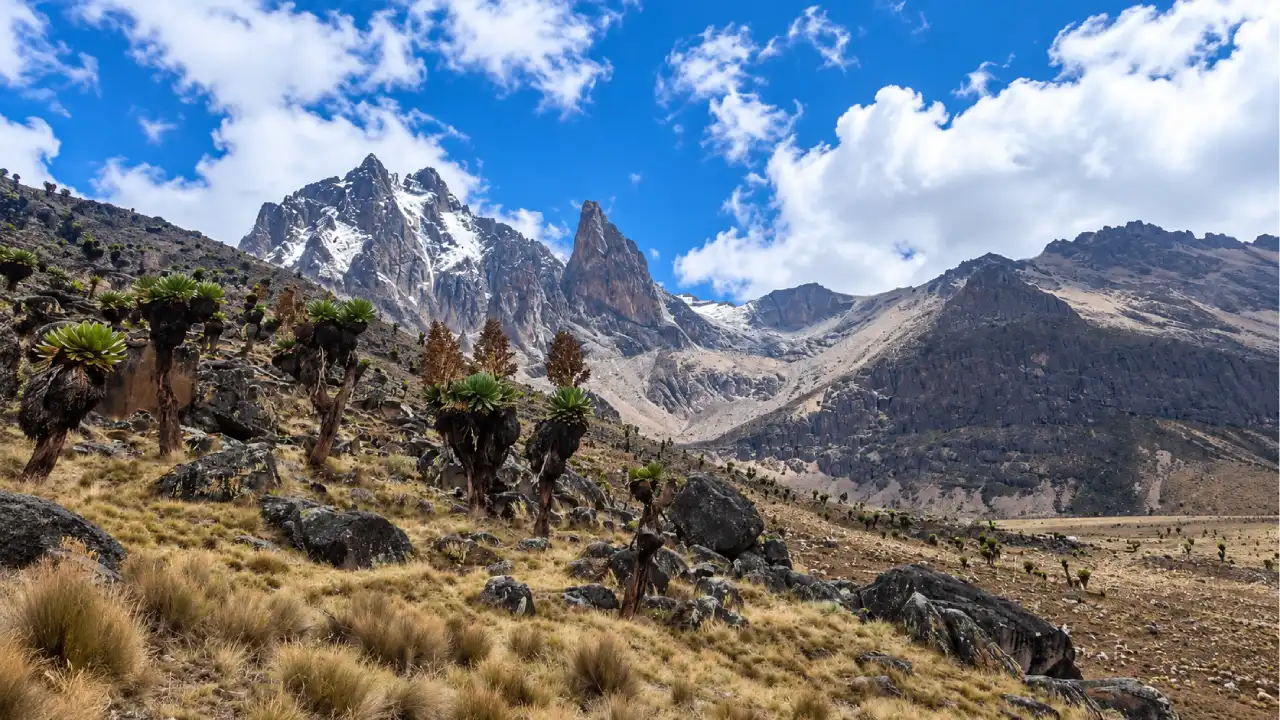
How to Prepare for Climbing Mount Kenya
Quick answer
Start preparing for Mount Kenya 8 to 12 weeks before your trek. Build walking endurance with long hikes, hills and stairs, carrying a loaded daypack. Choose a route with enough nights to acclimatise, because altitude is the main challenge. Break in your boots, pack warm layers and arrange travel insurance with evacuation cover. Learn the signs of altitude sickness, and tell your guide about any symptom at once.
Most trekkers aim for Point Lenana at 4,985 m. It needs no technical climbing, but it is a serious high-altitude walk.
Good Mount Kenya climbing preparation makes the difference between a hard week and a rewarding one. The mountain is Africa's second highest, and its trekking summit sits close to 5,000 metres. Thin air, cold mornings and long walking days test every climber, whatever their sport.
The good news is that ordinary, fit walkers reach Point Lenana every week. They succeed because they train for long days, choose a sensible itinerary and arrive with the right kit.
This guide walks you through each step in order. It covers your timeline, route choice, fitness training, altitude, gear, paperwork, health and summit-morning mindset. Each step is based on how our guides prepare climbers on the Sirimon, Chogoria and Naro Moru routes.
Mount Kenya preparation at a glance
Item | What to know |
|---|---|
Trekking summit | Point Lenana, 4,985 m |
Highest summit | Batian, 5,199 m (technical rock climb) |
Training time | 8 to 12 weeks for most walkers |
Typical trek length | 4 to 6 days for Point Lenana |
Hardest day | Summit day: a pre-dawn start and long descent |
Main risk | Altitude sickness, not technical difficulty |
Park entry | USD 70 per day for non-resident adults |
Driest months | January to February and July to early October |
Popular trek | 4 days via Sirimon, from USD 850 |
Your Mount Kenya preparation timeline
Begin about three months out, so your fitness and paperwork are ready together. Use this timeline as a checklist.
When | What to do |
|---|---|
12 weeks before | Choose your route and dates. Book your trek and flights. See a doctor about altitude and vaccines. |
10 to 12 weeks | Start training three to four times a week. Buy or borrow trekking boots. |
6 to 9 weeks | Add longer weekend hikes with hills. Carry a daypack of 6 to 8 kg. |
4 to 5 weeks | Do back-to-back hiking days. Buy travel insurance with evacuation cover. |
2 to 3 weeks | Apply for your Kenya eTA. Test every item of gear on a long hike. |
1 week | Reduce training so your legs are fresh. Pack and check the list with your guide. |
Day before | Rest, hydrate and attend the pre-trek briefing. Avoid alcohol. |
Step 1: Choose your route and number of days
Your route and trek length shape everything else in your preparation. More nights on the mountain give your body more time to adjust to altitude.
Route | Typical days | Why climbers choose it |
|---|---|---|
4 to 6 | Drier northwest side and a steady, popular trail to Point Lenana | |
4 to 6 | Glacial valleys, cliffs and alpine lakes on the eastern side | |
3 to 5 | A more direct western line for climbers short on time |
First-time high-altitude trekkers should avoid the shortest options. A 5-day plan adds a valuable acclimatisation night. Our guide on how many days to climb Mt Kenya compares the options in detail. You can also read Mount Kenya routes compared.
Our tip: Pick your route first, then train for its longest day. On most itineraries, that is summit day.
Step 2: Build trekking fitness
Train for endurance, not speed. On our 4-day Sirimon trek, summit day covers about 24 km over roughly 11 hours. Your goal is to walk all day, then do it again tomorrow.
A simple 12-week training plan
Weeks | Focus | Sample week |
|---|---|---|
1 to 3 | Base fitness | Three 45-minute brisk walks or easy runs. One 2 to 3 hour hike at the weekend. |
4 to 6 | Hills and load | Two hill or stair sessions. One 4 hour hike carrying 5 to 6 kg. Leg strength twice a week. |
7 to 9 | Long days | One 6 hour hike with 800 m or more of ascent. Carry 6 to 8 kg. Keep strength work going. |
10 to 11 | Back-to-back days | Two long hikes on consecutive days. Practise eating and drinking on the move. |
12 | Taper | Short, easy walks only. Arrive rested, not tired. |
What to include in your training
- Hiking with ascent: the closest match to the mountain. Hills, trails and stairs all count.
- Leg strength: squats, lunges and step-ups protect your knees on long descents.
- Core and balance: planks and single-leg work help on rocky, uneven ground.
- Cardio: cycling, swimming or running build your aerobic base between hikes.
- Rest days: recovery is part of training. Take at least one full rest day a week.
No amount of fitness prevents altitude sickness. Fit climbers sometimes struggle more, because they climb too fast. Train hard, then walk slowly on the mountain. Our article on how difficult climbing Mount Kenya is explains the fitness level each route needs.
Step 3: Prepare for altitude
Altitude is the biggest challenge on Mount Kenya. Your body needs time to adapt to lower oxygen levels. Preparing well means choosing a sensible ascent rate and knowing the warning signs.
How fast is too fast?
The Wilderness Medical Society advises a gradual gain in sleeping altitude above 3,000 m. Its guideline is no more than 500 m per night. It also suggests an extra night for every 1,000 m gained.
On the popular 4-day Sirimon trek, you sleep at about 3,300 m, then about 4,200 m. That second night is a gain of roughly 900 m. Many fit walkers manage it well, but some feel the altitude. A 5-day itinerary adds an acclimatisation night and lowers that risk.
Warning signs to know
Condition | Signs | What to do |
|---|---|---|
Acute mountain sickness (AMS) | Headache with nausea, dizziness, tiredness or poor appetite | Tell your guide. Do not climb higher until symptoms clear. |
Worsening AMS | Symptoms that grow despite rest | Descend. Even 300 m lower often brings fast relief. |
High-altitude cerebral oedema (HACE) | Confusion, drowsiness, stumbling or loss of coordination | Emergency. Descend at once with your guide. |
High-altitude pulmonary oedema (HAPE) | Breathlessness at rest, persistent cough, chest tightness | Emergency. Descend at once with your guide. |
Simple habits that help
- Walk slowly, even when you feel strong. Your guide sets the pace for a reason.
- Drink water steadily through the day.
- Eat well, even with a poor appetite.
- Avoid alcohol, especially in the first 48 hours at altitude.
- Never hide symptoms to protect your summit plan.
Ask your doctor whether altitude medication suits you. For a deeper explanation, read our guide to altitude sickness and climbing preparation.
Step 4: Get your gear ready
Gear preparation is about comfort and safety in the cold. Temperatures near the summit can fall below freezing before sunrise, even when Nairobi is warm.
Gear | Why it matters | Preparation tip |
|---|---|---|
Waterproof trekking boots | Protect feet on wet, rocky trails | Wear them on at least five long hikes first |
Layered clothing | Lets you adjust from forest warmth to summit cold | Base layer, fleece, insulated jacket and waterproof shell |
Warm sleeping bag | Camp nights at 4,200 m are cold | Choose one rated for sub-zero temperatures |
Headlamp | Summit day starts in darkness | Pack spare batteries and keep them warm |
Gloves and warm hat | Hands and head lose heat fast at altitude | Bring a thin pair and a thick pair of gloves |
Daypack, 25 to 35 litres | Carries water, layers and snacks | Train with the same pack you will use |
Sun protection | UV is strong at high altitude | Sunglasses, sunscreen and lip balm |
Trekking poles | Ease the load on knees during descent | Practise with them on training hikes |
Porters usually carry your main bag, so you only carry a daypack. Confirm what your package includes, such as tents, sleeping mats or sleeping bags. Our full Mount Kenya packing list covers every item.
Our tip: Never wear new boots on the mountain. Blisters can ruin a trek faster than poor fitness.
Step 5: Sort park fees, insurance and travel documents
Paperwork is easy to overlook while you focus on training. Sort it four to six weeks before you travel.
Mount Kenya park fees
The Kenya Wildlife Service charges conservation fees for each day inside Mount Kenya National Park. Rates rose on 1 October 2025.
Visitor category | Daily park fee per adult |
|---|---|
Non-resident | USD 70 |
African citizen | USD 30 |
Kenya resident | KSh 1,100 |
East African citizen | KSh 800 |
Camping and other fees may also apply. Check whether your quote includes park fees, because many packages list them separately.
Travel insurance
Buy travel insurance that covers trekking up to at least 5,000 m. It should include emergency evacuation and medical treatment. Our packages do not include insurance, so arrange it before you travel.
Entry documents
- Passport: valid for your full stay, with blank pages.
- Kenya eTA: most visitors need an approved Electronic Travel Authorisation before boarding. Apply online at least 72 hours before departure.
- Yellow fever certificate: required if you arrive from a country with yellow fever risk.
Entry rules can change, so check the official eTA portal before you book flights.
Step 6: Check your health before you go
See a doctor or travel clinic at least six to eight weeks before your trek. Some vaccines need time to take effect, and some need more than one dose.
Discuss these points with your doctor:
- Heart, lung or blood conditions: some conditions make high altitude unsafe.
- Past altitude problems: a history of altitude illness raises your risk on a fast ascent.
- Altitude medication: ask whether preventive medicine suits you, and how to use it.
- Vaccines: ask about yellow fever, typhoid, hepatitis A and routine boosters.
- Malaria: the mountain itself is cold, but other parts of Kenya carry malaria risk.
- Regular medicines: pack enough for the whole trip in your hand luggage.
Tell us about any condition when you book. Your guide can then plan the pace and watch for problems.
Step 7: Prepare your mind for summit morning
Summit day is as much a mental test as a physical one. You wake in the dark, walk in the cold and climb slowly towards sunrise.
On our 4-day Sirimon trek, summit day starts very early from Shipton's Camp at about 4,200 m. You climb past Harris Tarn to reach Point Lenana around sunrise. Then you descend to Old Moses Camp at about 3,300 m. Your guide sets the start time based on weather and group readiness.
How to prepare mentally:
- Expect discomfort. Cold hands, short breath and slow steps are normal at this height.
- Break the climb into small goals. Focus on the next rest stop, not the summit.
- Practise early starts. Do one training hike that begins before dawn with a headlamp.
- Accept the turnaround rule. Your guide may turn you back for safety. That decision protects your life.
- Save energy for the descent. Most of summit day is downhill, and tired legs cause falls.
When to go and how to get there
The driest trekking months are usually January to February and July to early October. Rain, cloud and strong wind remain possible in any month. Prepare for wet and cold conditions whenever you travel.
Season | Months | What to expect |
|---|---|---|
Drier season | January to February | Clearer mornings and firmer trails |
Long rains | March to June | Wet, muddy trails and more cloud |
Drier season | July to early October | Cold nights and good summit views |
Short rains | Late October to December | Afternoon showers and wetter forest sections |
Mount Kenya sits in central Kenya, north of Nairobi. Each route starts from its own gate. Sirimon and Naro Moru begin on the western side, near Nanyuki and Naro Moru towns. Chogoria begins on the eastern side, near Chogoria town. Our treks include a transfer from Nairobi, and your itinerary confirms the timing.
For month-by-month detail, read the best time to climb Mount Kenya. For maps and travel options, see where is Mount Kenya.
Common Mount Kenya preparation mistakes
Many Mount Kenya treks go wrong because of a few avoidable mistakes.
- Choosing the shortest itinerary. Fewer days mean faster height gain and higher altitude risk.
- Training only in the gym. Treadmills help, but nothing replaces long hikes on real hills.
- Walking too fast on day one. Early speed often leads to headaches higher up.
- Wearing new boots. Untested footwear causes blisters within hours.
- Packing too few warm layers. Summit mornings can be far colder than climbers expect.
- Skipping insurance. Evacuation from a remote mountain is costly without cover.
- Hiding symptoms. Reporting a headache early keeps a small problem small.
How Olengugih Safaris helps you prepare
We run private Mount Kenya climbs, so your preparation and pace fit you. Every trek includes:
- a pre-trek briefing on the route, weather, equipment and altitude
- local mountain guides who set a steady pace and watch for symptoms
- daily trail coordination and camp arrangements
- park-entry and trailhead assistance
- meals and drinking water, as listed in your confirmed quote
Our most popular choice is the 4 Days Mount Kenya Trek via Sirimon Route, from USD 850. If you want an extra acclimatisation night, consider the 5 Days Mount Kenya Trek via Chogoria and Sirimon. New to mountains? Test yourself first on the 1 Day Mount Kenya Hike via Sirimon.
Our Mountain Climbing Guide adds further planning advice for every mountain we climb.
Frequently asked questions
How long should I train for Mount Kenya?
Most walkers need 8 to 12 weeks of training. Start earlier if you rarely hike. Focus on long hikes with ascent and a loaded daypack.
Do I need climbing experience to reach Point Lenana?
No. Point Lenana is a non-technical trekking summit at 4,985 m. Batian and Nelion need technical rock-climbing skills and equipment.
Can a beginner climb Mount Kenya?
Yes, if they train well and choose enough days. A fit beginner can reach Point Lenana on a 4 or 5 day trek. Good health and a steady pace matter more than experience.
What is the hardest part of climbing Mount Kenya?
Summit day is the hardest part. It starts before dawn, reaches 4,985 m and ends with a long descent. On our 4-day Sirimon trek, it covers about 24 km.
How do I prevent altitude sickness on Mount Kenya?
Choose an itinerary with enough nights, walk slowly and drink steadily. Avoid alcohol and report any headache to your guide. Ask your doctor about preventive medication.
How cold is it at the summit?
It is often below freezing before sunrise, with strong wind. Pack a base layer, fleece, insulated jacket, waterproof shell, warm gloves and a hat.
Do I need travel insurance for Mount Kenya?
Yes. Choose a policy that covers trekking to at least 5,000 m, including emergency evacuation. Insurance is not included in our packages.
How much does it cost to climb Mount Kenya?
Our popular 4-day Sirimon trek starts from USD 850. Non-resident park fees are USD 70 per day. Read our Mount Kenya climbing cost guide for a full breakdown.
Ready to start preparing?
Tell us your preferred dates, route and group size. We will match you with the right itinerary and a preparation plan. Plan your adventure or contact our team today.
What our guests say
- Google Reviews: rated 4.8 out of 5, based on 12 reviews
- Tripadvisor: rated 5.0 out of 5, based on 22 reviews
- SafariBookings: rated 5.0 out of 5, based on 54 reviews
Keep planning
- Mount Kenya mountain guide
- Mt Kenya peaks: Batian, Nelion and Point Lenana heights
- Mount Kenya climbing packages: costs, inclusions and tips
- All Kenya climbing expeditions
- Meet our mountain team
Sources
- Kenya Wildlife Service: Wildlife Conservation and Management (Access, Entry and Conservation) (Fees) Regulations 2025, Legal Notice No. 160 of 2025
- Centers for Disease Control and Prevention: CDC Yellow Book 2026, High-Altitude Travel and Altitude Illness
- Wilderness Medical Society: Acute Altitude Illness Prevention and Treatment Guidelines
- Government of Kenya: Electronic Travel Authorisation (eTA) official portal
- Centers for Disease Control and Prevention: CDC Yellow Book 2026, Yellow Fever Vaccine and Malaria Prevention Information, by Country