Discover Mount Kenya
Discover Mount Kenya: The Heart of Kenya’s Highlands
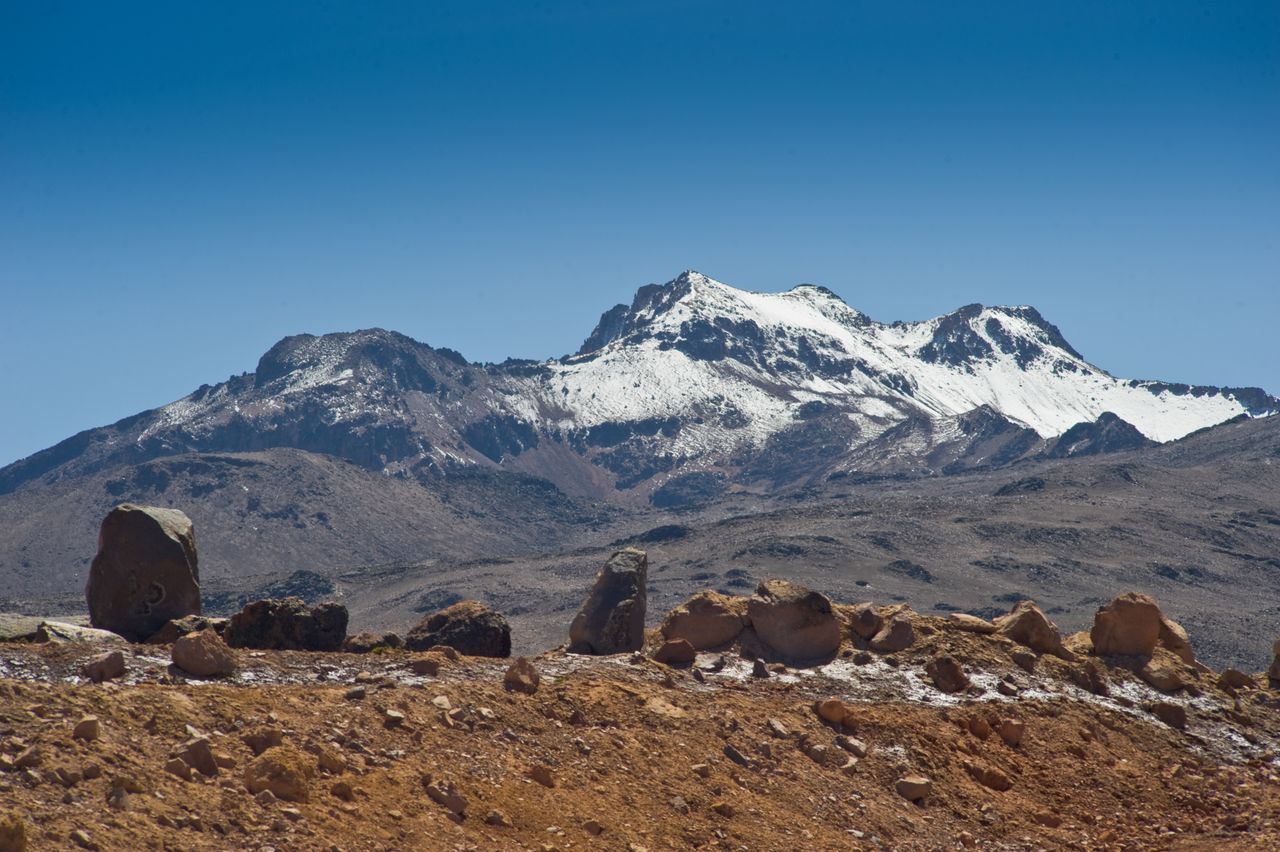
Mount Kenya rises above the central Kenyan highlands as the country’s highest mountain and Africa’s second highest peak. It is an ancient, deeply eroded volcano whose striking rock towers, glacial valleys, mountain lakes and changing vegetation create a distinctive trekking landscape. Unlike a mountain journey focused only on reaching the top, a Mount Kenya expedition can be designed around forest walking, an alpine lake, a high viewpoint or a multi day crossing of the massif.
The Mount Kenya National Park and surrounding natural forest have international conservation significance and form part of a UNESCO World Heritage property. The landscape is also culturally important to neighbouring communities, particularly the Kikuyu and Meru peoples. Visitors should approach the mountain as both an outdoor destination and a protected cultural and ecological landscape.
Mount Kenya’s Main Summits and Their Differences
- Batian, 5,199 metres: the highest summit. Reaching Batian involves technical rock climbing, route specific equipment and appropriate mountaineering expertise. It is not the endpoint of a normal trekking package.
- Nelion, approximately 5,188 metres: another high technical summit, distinct from a standard guided walking route. Conditions and access require specialist preparation.
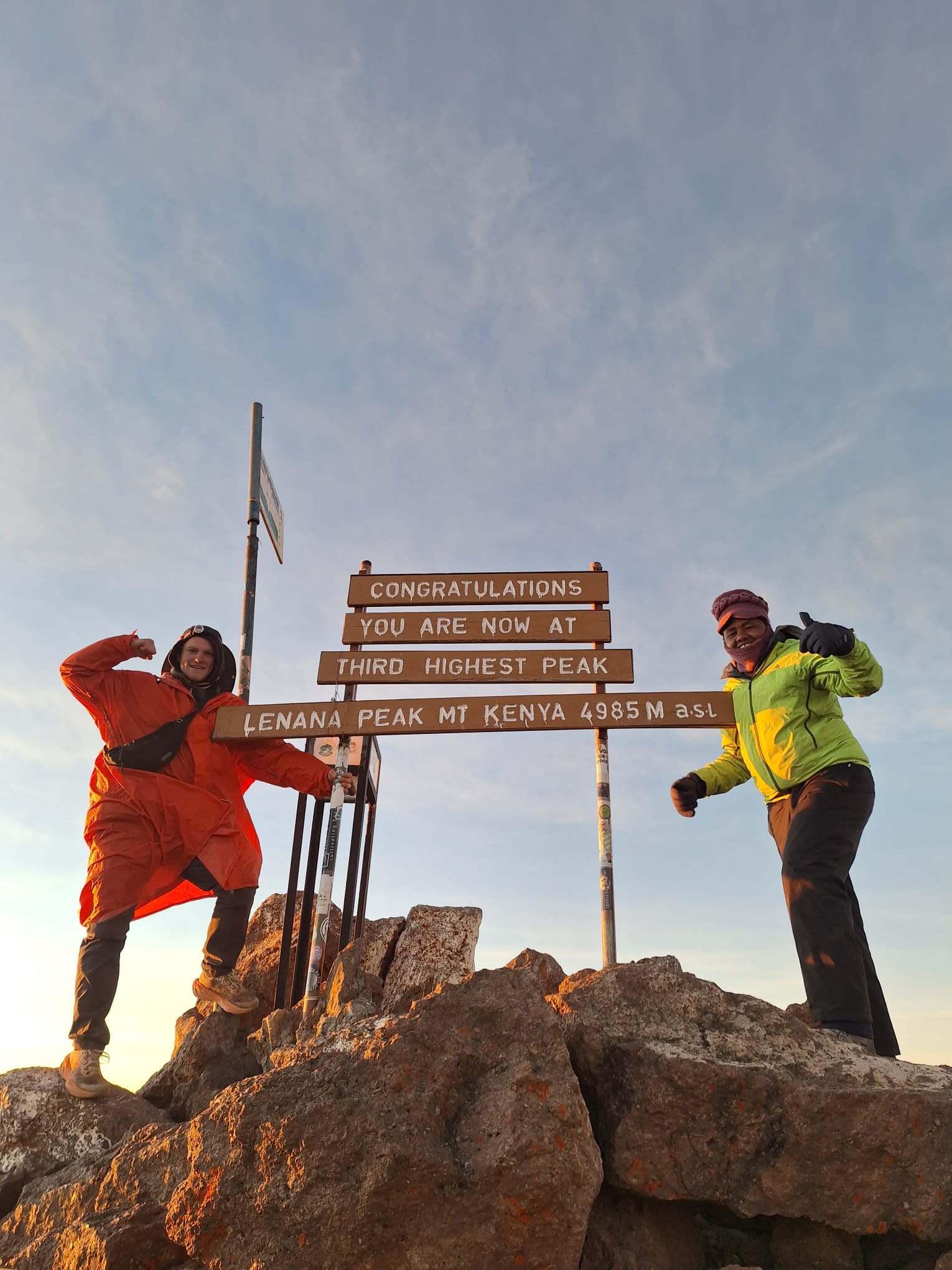
- Point Lenana, approximately 4,984 metres: the well known nontechnical trekking objective for fit walkers following suitable routes. It is still a serious high altitude undertaking, often approached before sunrise in cold conditions.
These differences matter when comparing package descriptions. A Point Lenana sunrise trek should never be represented as a technical ascent of Batian or Nelion. Olengugih Safaris will identify the actual summit or turnaround point in the specific expedition itinerary.
Mount Kenya Trekking Routes
Sirimon Route
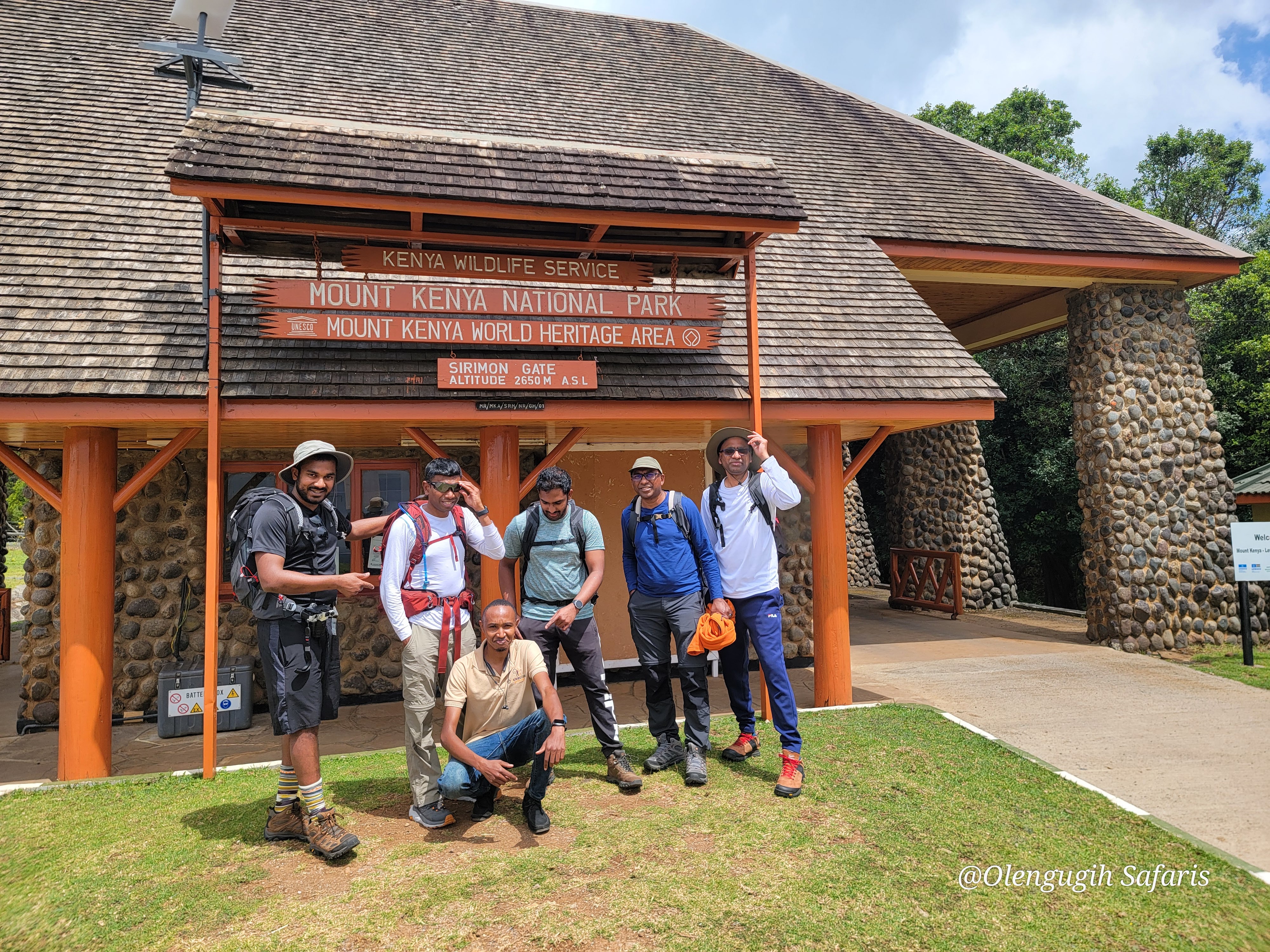
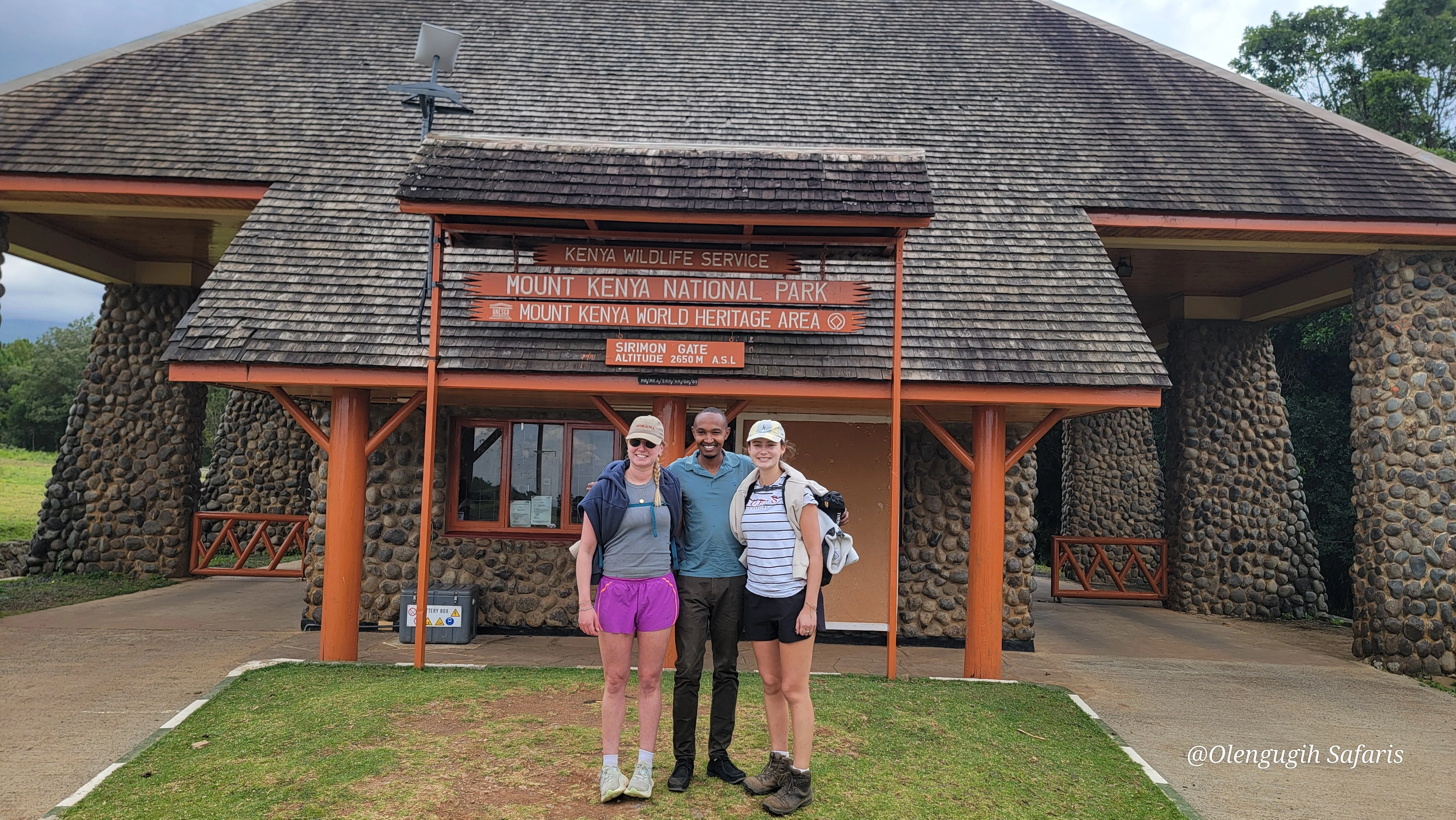
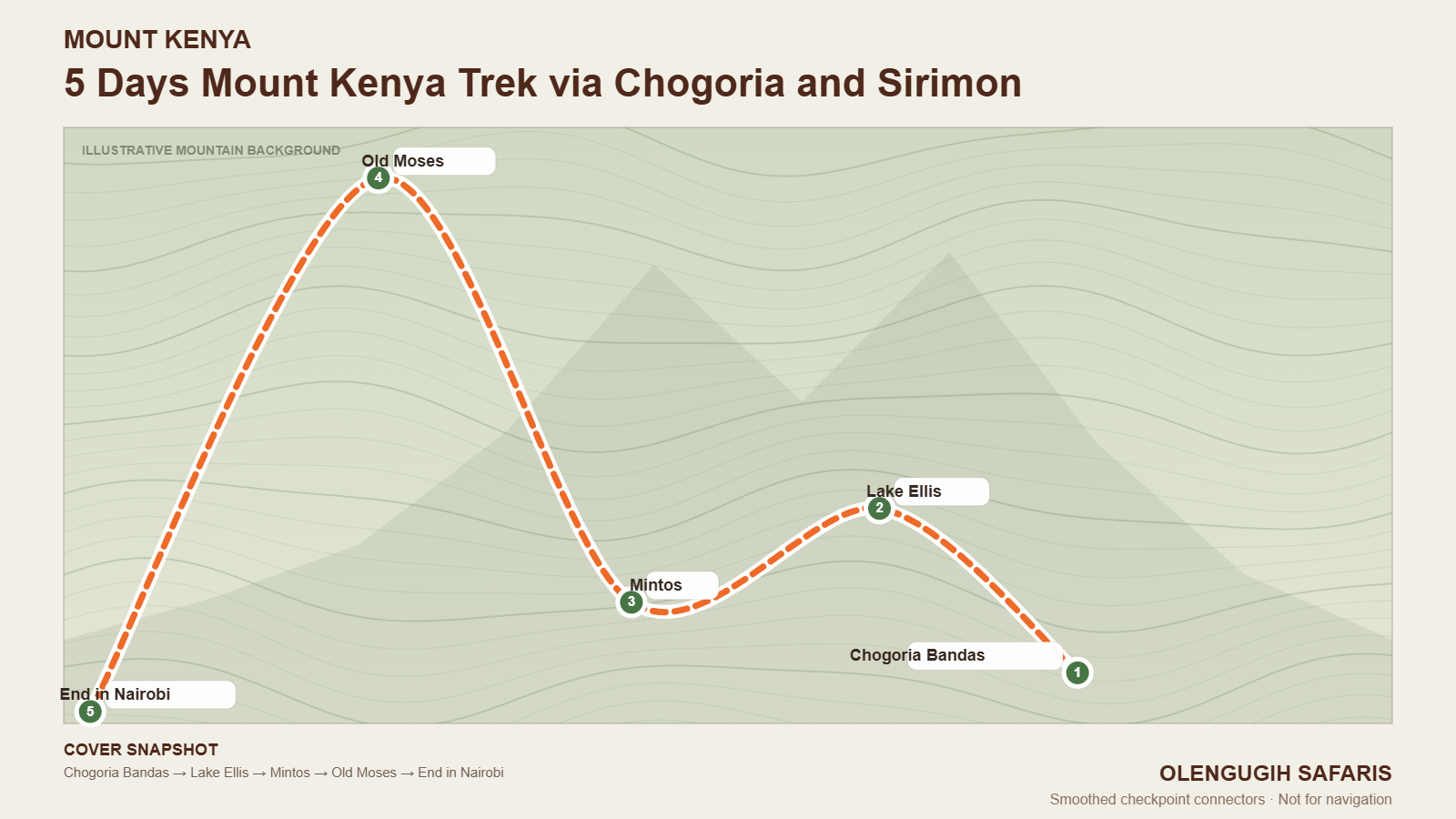
The Sirimon approach generally begins on the northwestern side of Mount Kenya near Nanyuki. It crosses forest, heath and open moorland, with commonly used overnight areas around Old Moses and Shipton’s Camp on suitable itineraries. Sirimon is often chosen for its expansive high mountain views and as an ascent or descent leg on a longer traverse. The walking schedule depends on the trip length, park access conditions and acclimatization plan.
Chogoria Route
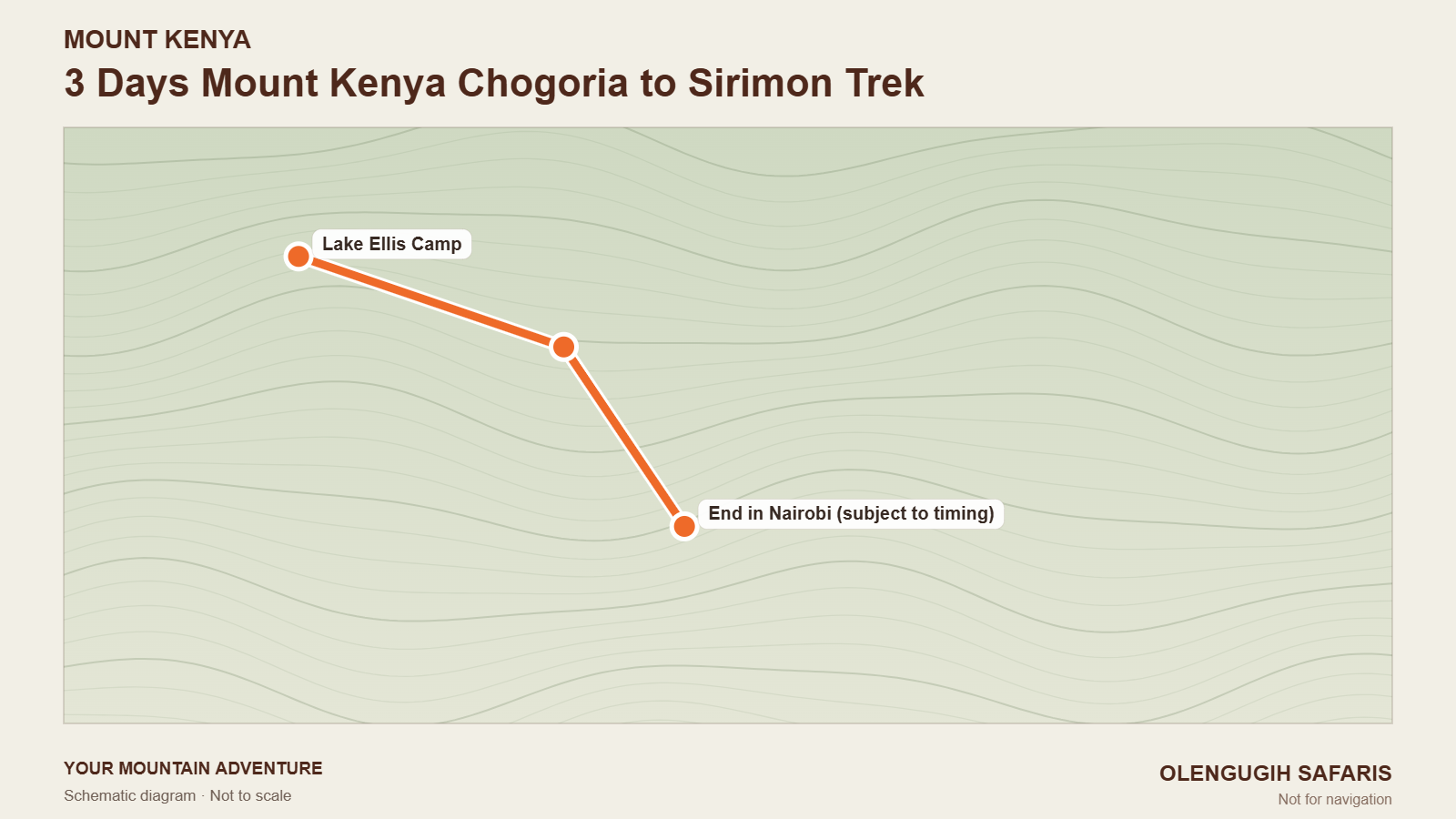
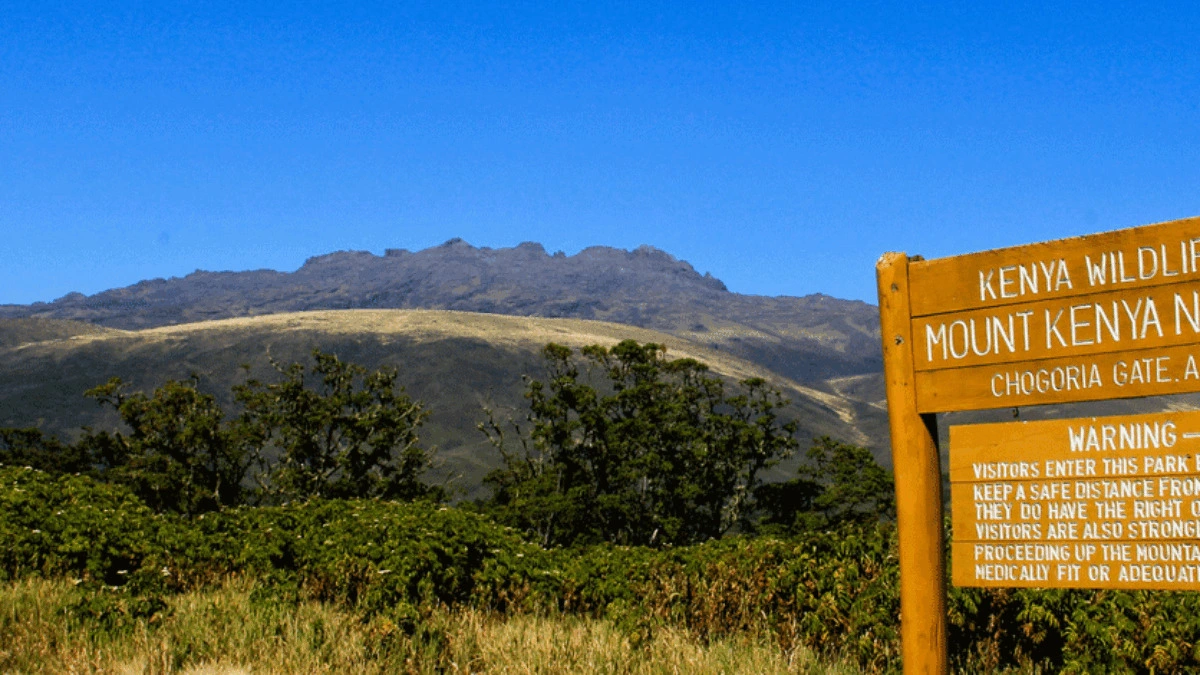
Chogoria offers some of the mountain’s most dramatic scenery. Depending on the route taken, trekkers may encounter viewpoints over the Gorges Valley and the landscapes around Lake Ellis or Lake Michaelson. A full traverse may combine the Chogoria side with Sirimon. The route has long walking sections and exposed high altitude terrain, so the detailed camp sequence should be checked before departure.
Naro Moru Route
The Naro Moru approach is associated with a comparatively direct ascent profile, including the often wet and demanding Vertical Bog area on some itineraries. It reaches the higher camps around Mackinder’s before routes continue toward Point Lenana or join another descent corridor. Faster height gain should not be confused with an easier mountain experience; pace and acclimatization remain central.
Landscapes, Lakes and Wildlife
A Mount Kenya climb can begin in dense montane forest and bamboo before opening into giant heath, moorlands and high altitude vegetation. Higher up, the landscape becomes rocky and windswept, punctuated by glacially sculpted valleys, tarns and striking alpine plants such as giant groundsels and lobelias. Wildlife is more likely in the lower ecosystems; sightings are never guaranteed and trekkers must respect all park safety directions.
The mountain also serves as an important watershed for surrounding regions. Travelling responsibly means remaining on agreed trails, avoiding disturbance to sensitive alpine plants, carrying waste out and following conservation instructions.
Who Is Mount Kenya Suitable For?
Lower elevation day hikes may suit active visitors who want a first mountain experience without spending several nights at altitude. Multi day Point Lenana itineraries are better suited to walkers with good endurance, reliable footwear and the willingness to trek in cold, thin air. Technical climbs on Batian or Nelion are a separate discipline and require qualified arrangements. No summit is assured because weather, altitude symptoms and safety decisions may change the plan.
When to Trek Mount Kenya
Many climbers plan around comparatively drier periods, often around January to February and July to early October. Conditions remain variable throughout the year, with cloud, rain, strong winds and cold temperatures possible on any trek. Higher altitude weather can change rapidly even when the approach towns are warm. Choose the actual travel dates and route after reviewing the current forecast, park guidance and the operator’s confirmed itinerary.
Planning, Fitness and Equipment
- Choose a route and duration that allow a sensible rate of ascent rather than selecting the shortest possible schedule by default.
- Build walking endurance before travel using longer hikes, steps or hills and a daypack similar to the one you will carry.
- Bring layered insulation, waterproof protection, sturdy trekking footwear, a headlamp for early departures, gloves and reliable sun protection.
- Confirm what sleeping gear, tents or huts, meals, drinking water, permits and guide services are included in the actual package.
- Discuss previous altitude difficulties, relevant health concerns and emergency arrangements with suitable professionals before booking.
- Use park authorised access arrangements, respect wildlife and mountain communities, and keep the trekking landscape free of litter.
Choosing Your Mount Kenya Experience
A day hike in the Sirimon area, a scenic Chogoria valley trek and a longer Point Lenana traverse can deliver very different experiences. Start with your preferred scenery, fitness, available days and actual climbing objective. The linked climbing route and expedition lists on this page show the published options; contact Olengugih Safaris to confirm the current route, camps and permits.
Frequently Asked Questions
What is the highest point on Mount Kenya?
Batian is the highest summit at 5,199 metres. Point Lenana is a different, lower trekking summit at about 4,984 metres.
Can I trek Mount Kenya without technical rock climbing?
Yes. Many popular trekking itineraries aim for Point Lenana or scenic viewpoints. Batian and Nelion require technical mountaineering arrangements.
Which route has dramatic lakes and valleys?
Chogoria is well known for alpine lakes, the Gorges Valley and dramatic scenery. Confirm the exact lake visits because not every Chogoria itinerary follows the same trail.
How many days should I allow?
Day hikes and multi day climbs are both possible. The appropriate number depends on your route, acclimatization and whether you are attempting Point Lenana or technical peaks.
Is Mount Kenya cold at the summit?
Yes. High elevations can be very cold, windy and wet, especially around sunrise. Prepare for conditions that are substantially different from those at lower elevations.
Official Park and Conservation Information
For park rules, access and up to date visitor information, refer to the Kenya Wildlife Service. UNESCO provides additional background on the protected natural forest and its conservation significance.