


How Difficult Is Climbing Mount Kenya?
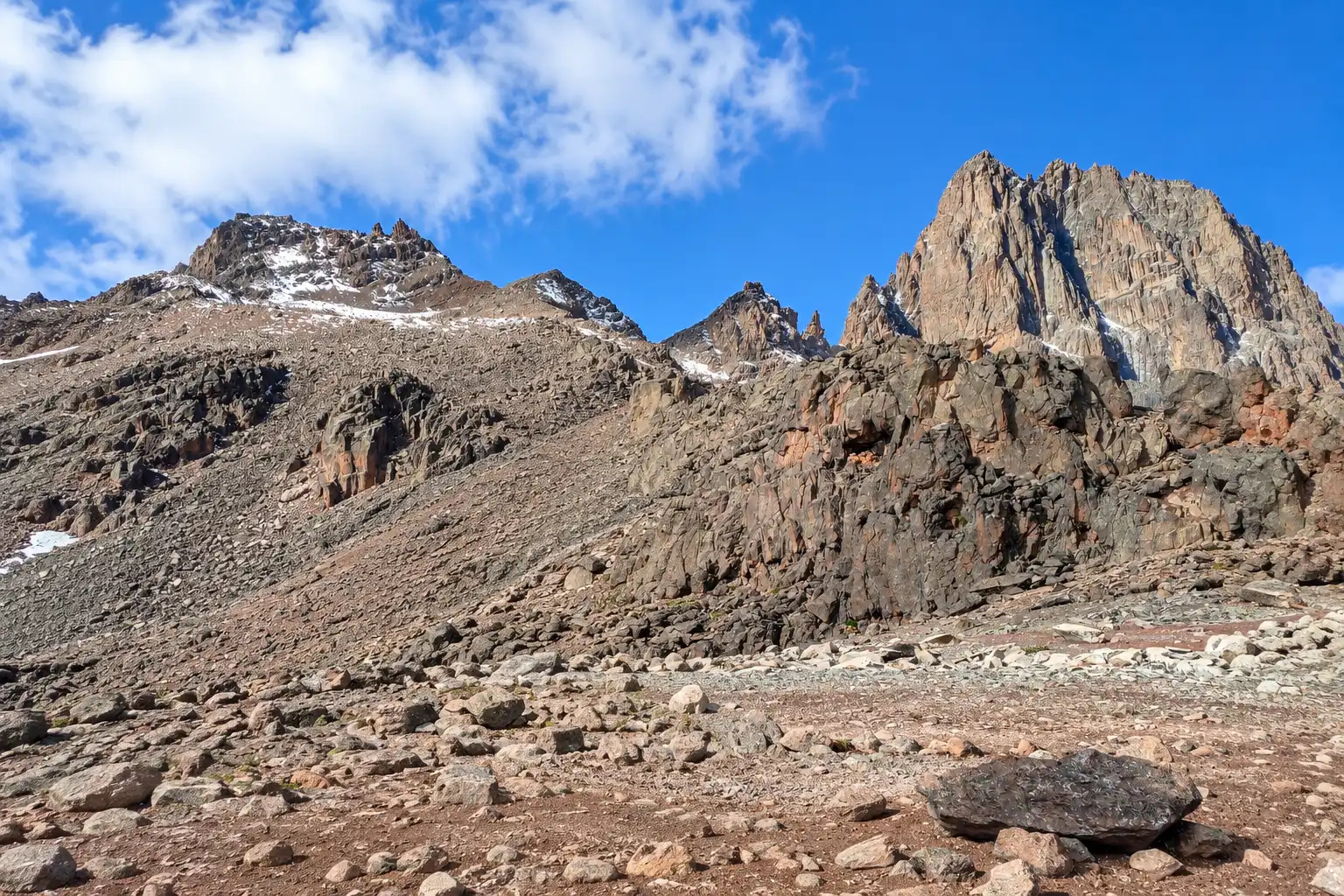
Climbing Mount Kenya is moderately difficult. The trek to Point Lenana (4,985 metres) needs no technical skills. Altitude, cold and long days are the real challenges. Most fit trekkers succeed with a guide and four to six days. The true summits, Batian and Nelion, are technical rock climbs for experts.
Last updated: October 2026.
How difficult is climbing Mount Kenya at a glance
- Overall difficulty: Moderate for the trek, expert-level for the true summits
- Trekking summit: Point Lenana, 4,985 metres
- Technical peaks: Batian, 5,199 metres, and Nelion, 5,188 metres
- Technical skills for Lenana: None needed
- Main challenges: Altitude, cold nights, changing weather and a pre-dawn summit push
- Hardest day: Summit day, often 8 to 12 hours on foot
- Typical length: Four to six days including the descent
- Guide: Required by park rules
- Easiest route: Sirimon
- Steepest route: Naro Moru
Point Lenana vs Batian and Nelion
Mount Kenya has two very different challenges. One is a high-altitude trek. The other is a serious mountaineering climb.
Point Lenana (4,985 metres)
- This is the trekking summit that most visitors climb.
- You walk on trails and scree, with no ropes.
- Altitude and cold make it hard, not technical skill.
- Good fitness, a slow pace and a guide are enough for most people.
Batian (5,199 metres) and Nelion (5,188 metres)
- These are the true summits, made of steep rock and ice.
- Climbers need ropes, harnesses and mountaineering experience.
- Routes are graded, and conditions change fast.
- Only experienced climbers should attempt them, with a qualified mountain guide.
If you are unsure, plan for Point Lenana. It is a rewarding goal on its own.
What makes climbing Mount Kenya hard?
Altitude
Point Lenana is nearly 5,000 metres high. Air there holds far less oxygen than at sea level. Altitude sickness can affect anyone, however fit. Headache, nausea and poor sleep are common signs.
Cold
Nights are freezing all year. Temperatures fall by about 6°C for every 1,000 metres you climb. A warm sleeping bag and good layers matter.
Weather
Mornings are often clear. Cloud, rain or snow can roll in by midday. Rain makes trails muddy and slippery, especially in April, May and November.
Long days and summit night
Summit day starts around 2:00 to 3:00 am. You walk in the dark, in the cold, on steep scree. The climb to the top can take several hours. The descent is long and tiring on the knees.
Basic conditions
Huts and camps are simple. There are no hot showers high up. You carry only what you need for the day.
How difficult is each Mount Kenya route?
Route | Difficulty | Why |
|---|---|---|
Moderate | Gentle gradient, good acclimatisation | |
Moderate to hard | Longer approach, steep sections, stunning scenery | |
Naro Moru | Moderate to hard | Shortest and steepest, with a muddy lower section |
Burguret | Hard | Remote, longer days, fewer facilities |
Sirimon up and Chogoria down is the gentlest and most scenic plan. Naro Moru is faster but gains height quickly. Add a rest day on any route.
Mount Kenya vs Kilimanjaro: which is harder?
Kilimanjaro is higher, but Mount Kenya is steeper in places. Many trekkers find the two comparable. The right answer depends on the route and your pace.
Factor | Mount Kenya (Point Lenana) | Kilimanjaro (Uhuru Peak) |
|---|---|---|
Summit height | 4,985 metres | 5,895 metres |
Typical length | 4 to 6 days | 5 to 9 days |
Terrain | Steeper, rockier trails | Longer, more gradual paths |
Altitude risk | High | Very high |
Crowds | Quiet | Busy |
Technical skill | None for Lenana | None |
Point Lenana is a good warm-up for Kilimanjaro. It is also a fine goal on its own.
Fitness and training for Mount Kenya
You do not need to be an athlete. You do need steady fitness and strong legs.
- Start 8 to 12 weeks before: Build a base with walking, running or cycling.
- Hike with a pack: Do weekend hikes with a loaded daypack.
- Train on hills and stairs: This prepares your legs for steep sections.
- Break in your boots: Wear them on long walks before the trip.
- Practise a slow pace: Slow and steady beats fast and tired.
- Work on your core and legs: Squats and lunges help.
Fitness level | What to expect |
|---|---|
Beginner | Possible with a longer plan and extra training |
Active | Comfortable with a slow pace and a rest day |
Very fit | Faster pace, but altitude still affects everyone |
Fitness helps, but it does not prevent altitude sickness. A slow pace and enough days matter more.
How to make Mount Kenya easier
- Take more days: Five or six days beat four. Extra time lets your body adjust.
- Choose Sirimon: Its gentle gradient makes it the easiest ascent.
- Add a rest day: A day at Shipton's Camp or Mackinder's Camp boosts your chances.
- Walk slowly: Keep a pace where you can still talk.
- Drink plenty of water: Sip steadily through the day.
- Eat well: Carbohydrates give you energy and warmth.
- Pack right: Warm layers, waterproofs and a good sleeping bag.
- Travel in the dry months: January, February, August and September have the best conditions.
- Use a good guide: An experienced guide spots problems early.
- Know when to turn back: Descending is always the right call if symptoms worsen.
- Take insurance: Cover trekking to 5,000 metres and evacuation.
With good planning, most healthy trekkers can reach Point Lenana.
Look after your feet: they decide your climb
Your feet play a big part in whether you reach the summit. Blisters can ruin a trek long before altitude does. Good footwear is the best protection.
- Wear boots with an allowance: Choose a pair with room in the toe box. Your toes should move freely, with about a thumb's width of space.
- Why the allowance matters: Feet swell at altitude and on long days. On steep descents, toes slide forward and hit the front of a tight boot.
- Break them in: Wear your boots on long walks for several weeks before the trip.
- Choose good socks: Wear moisture-wicking socks, and carry spare pairs.
- Treat hot spots early: Stop and apply a blister plaster at the first sign of rubbing.
- Keep feet dry: Change damp socks at camp and let your feet air.
- Trim your toenails: Short nails prevent pain on the descent.
Try boots on in the afternoon, when your feet are slightly swollen. That gives the truest fit.
Frequently asked questions
How difficult is climbing Mount Kenya?
Moderately difficult. Point Lenana needs no technical skills, but altitude, cold and long days test most trekkers.
Is Mount Kenya harder than Kilimanjaro?
Not usually. Kilimanjaro is higher. Mount Kenya has steeper trails. Many trekkers rate them as similar.
Can a beginner climb Mount Kenya?
Yes, to Point Lenana. You need good fitness, a guide and enough days to acclimatise.
Do you need climbing experience for Mount Kenya?
Not for Point Lenana. Batian and Nelion need technical mountaineering skills.
How long does it take to climb Mount Kenya?
Four to six days including the descent. Longer plans improve your chance of success.
What is the hardest part of climbing Mount Kenya?
Summit night. You start around 2:00 to 3:00 am, in the cold, at high altitude.
What is the easiest route up Mount Kenya?
Sirimon. Its gradual climb helps your body adjust.
What is the hardest route up Mount Kenya?
Burguret is the hardest. Naro Moru is the steepest of the main routes.
Do you need a guide to climb Mount Kenya?
Yes. Park rules require trekkers to travel with a registered guide.
Does everyone get altitude sickness on Mount Kenya?
No, but anyone can. Climb slowly, drink water and tell your guide about symptoms.
How fit do I need to be to climb Mount Kenya?
Good general fitness. Train for eight to twelve weeks with hikes, hills and stairs.
What is the best time to climb Mount Kenya?
January, February, August and September. Trails are drier and skies are clearer.
Climb Mount Kenya with Olengugih Safaris
Olengugih Safaris is a Kenya-based operator. We can help you choose the route, the month and the number of days. Contact us with your dates and fitness level and we will suggest a plan.
Guests can read reviews from other travellers on GetYourGuide, SafariBookings and Tripadvisor.
About the writer
Written by Kelvin, safari specialist/guide at Olengugih Safaris. Kelvin is a Kenya-based safari guide with first-hand experience of the country's wild places. He helps guests plan treks and safaris that match their fitness, time and budget.