About This Climbing Route
Shira Route on Mount Kilimanjaro
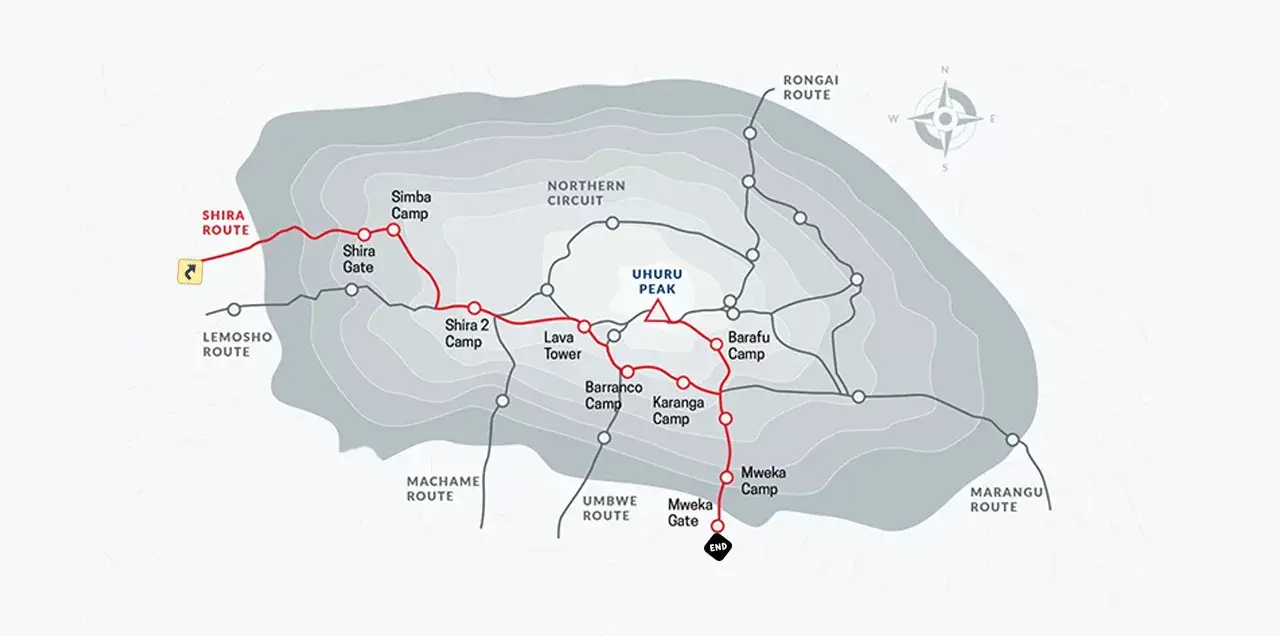
Shira enters Kilimanjaro from the western side and focuses on the high volcanic plateau associated with the mountain's oldest summit formation. It shares later trekking terrain with other western routes, yet it differs from the forest-based Lemosho approach because some Shira itineraries use vehicle access to a relatively high starting point. That rapid change in altitude deserves particular care.
Londorossi and access to the high plateau
Travel generally begins with registration near Londorossi and a drive toward the western plateau access. The exact vehicle stopping point and the start of walking vary with park rules and weather. Rather than slowly emerging through many rainforest stages, hikers can enter an open, higher landscape with cold wind and wide views much earlier in their journey.
Shira camps and the volcanic landscape
The Shira Plateau has expansive moorland, rock formations and views across the western mountain. Depending on the itinerary, walkers may move around Shira 1, Shira 2, Moir or connected routes toward the Lava Tower area. These stages should be chosen for sensible height gain and acclimatization, not treated as interchangeable camp names.
Connection toward the summit and descent
Many Shira summit programmes link to the southern circuit around Barranco and Karanga before Barafu and an Uhuru Peak attempt. Other legitimate variants may differ. The eventual descent commonly follows Mweka Gate. The important operational detail is the actual ascent and sleeping profile over the complete journey rather than the route title alone.
Who Should Choose This Route?
Shira can appeal to hikers who want to spend more time among open volcanic landscapes and prefer a western approach. Because a high-altitude vehicle drop-off can reduce natural acclimatization opportunities, it is especially important to assess the first nights. A longer, carefully paced package may be more appropriate than a compressed version.
Preparation, Altitude and Safety
Ask about the elevation of the initial sleeping camp, the planned acclimatization stages and emergency descent arrangements. Carry sun and cold-weather protection, keep hiking pace conservative and report altitude symptoms without delay. Never assume that immediate access to high scenery means the body has adapted to the altitude.
When to Go and What to Confirm
Typical clearer periods around January to March and June to October are often popular, but weather can be wet or freezing at any time. Our source catalogue includes a ten-day Shira journey; confirm how many days are actually spent trekking and whether arrival or recovery days are included.
Frequently Asked Questions
How does Shira differ from Lemosho?
Shira variants commonly begin at higher elevation, sometimes using vehicle access to the plateau, while Lemosho starts with lower forest trekking.
Is acclimatization a concern?
Yes. Early high-altitude exposure can be significant, making sleeping elevations and pacing particularly important.
Do Shira expeditions use tents?
Standard Shira programmes are camping treks, subject to confirmed operator arrangements.
This route guide is general planning information. Refer to the linked expedition packages for the actual day-by-day schedule. Exact camp arrangements, park requirements, fees, equipment and services must be confirmed in an Olengugih Safaris quotation before travel.