About This Climbing Route
Rongai Route on Mount Kilimanjaro
Rongai approaches Kilimanjaro from the north near the Kenya–Tanzania border. It offers a different perspective on Kibo and Mawenzi, with generally drier lower slopes than many southern approaches. The early trek can feel quieter, but remoteness does not make the summit easy. Rongai remains a demanding high-altitude climb with a serious final ascent.
Northern entrance and first camps
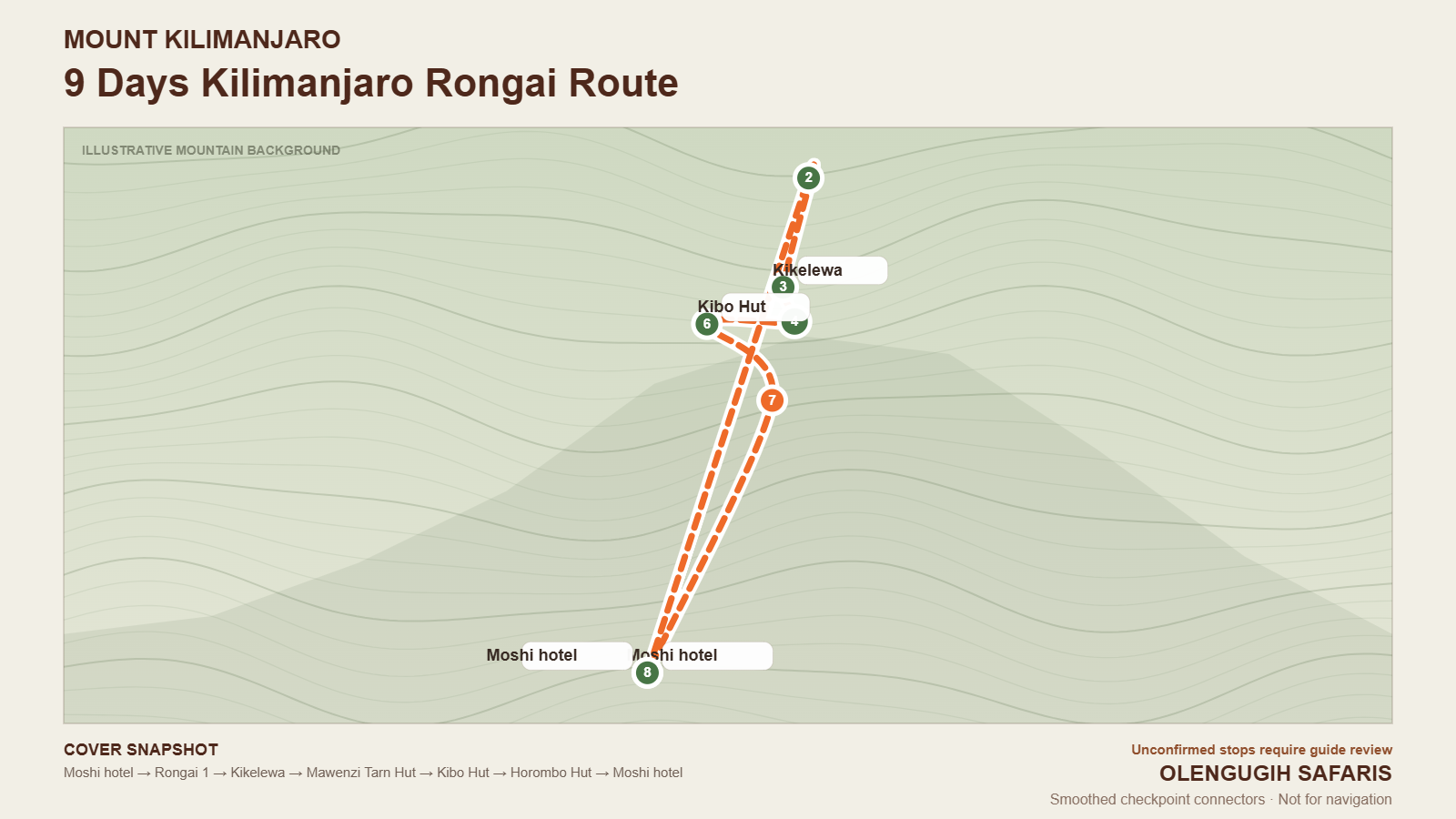
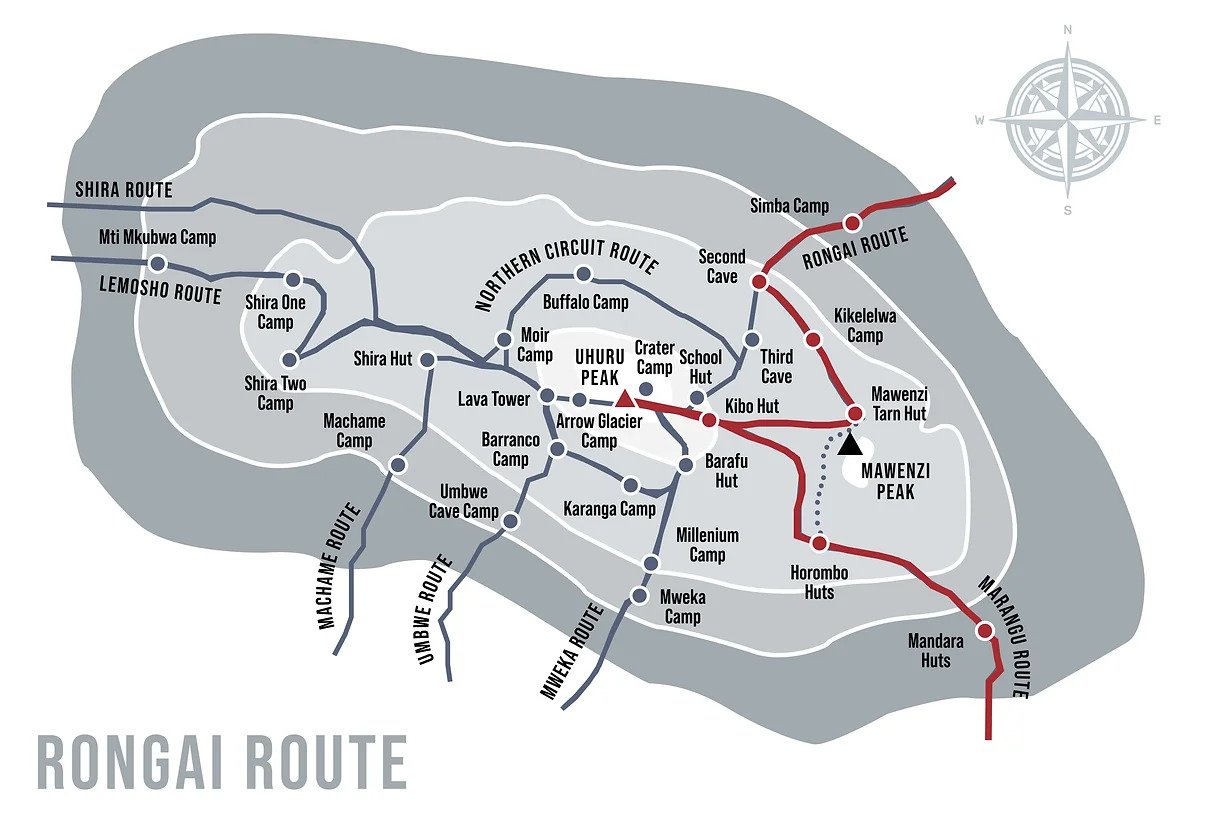
The journey usually involves a road transfer from Moshi or another agreed base toward the northern trailhead, often associated with Rongai or Nalemoru. Hikers enter pine or forest-edge zones and continue into open moorland. Camp names can differ between itinerary variants, with Simba Camp or early cave camps commonly referenced.
Kikelewa, Mawenzi Tarn and acclimatization
Longer itineraries may progress through Kikelewa and Mawenzi Tarn, where the jagged Mawenzi massif dominates the view. This landscape differs noticeably from the Shira Plateau. Adding a careful acclimatization day can make the ascent schedule more manageable, but cannot eliminate the possibility of altitude illness.
Kibo crossing, summit and Marangu-side descent
The trail traverses increasingly open alpine terrain toward Kibo Hut or an equivalent high camp. A summit attempt follows a cold overnight ascent toward Gilman's Point and Uhuru Peak. Standard Rongai programmes commonly descend by the Marangu path, allowing a different view from the entry side. Check that travel and hotel nights are not confused with trekking days.
Who Should Choose This Route?
Rongai may appeal to people seeking a northern landscape, a quieter start or conditions that can be less wet than the southern forest corridors. The choice should also consider the number of acclimatization days and the length of the summit day. A supposedly gentle lower slope does not predict how any individual will handle the summit.
Preparation, Altitude and Safety
You should prepare for cold, wind, volcanic dust and possible changes in weather. Proper guide registration, sufficient water, good footwear and a clear altitude response plan are essential. Northern approach logistics can involve long transfers, so confirm the start time and whether meals, camping equipment and porter support are included.
When to Go and What to Confirm
The northern slopes can be relatively dry in periods when other approaches are wet, but no season guarantees ideal conditions. Source operators describe both eight and nine day Rongai journeys, sometimes counting airport arrival. The final booked document should explain the exact sequence of camps and any acclimatization day.
Frequently Asked Questions
Does Rongai start in Kenya?
No. The climbing entrance is in Tanzania, although the route approaches the mountain from near the Kenyan border.
Is Rongai less crowded?
Its lower northern stages are often quieter, but the high camps and descent may meet other route users.
Which gate is used for descent?
Many Rongai itineraries descend along the Marangu corridor rather than returning to the northern start.
This route guide is general planning information. Refer to the linked expedition packages for the actual day-by-day schedule. Exact camp arrangements, park requirements, fees, equipment and services must be confirmed in an Olengugih Safaris quotation before travel.