South Island National Park is one of Kenya’s most remote and extraordinary protected areas, offering visitors a rare opportunity to explore a volcanic island in the middle of Lake Turkana, the world’s largest permanent desert lake. Located in northern Kenya, the park covers the entirety of South Island, a rugged landscape of lava fields, volcanic cones, rocky shores, and pristine habitats surrounded by the striking turquoise waters of Lake Turkana.
Established as a national park in 1983, South Island National Park forms part of the Lake Turkana National Parks UNESCO World Heritage Site, alongside Sibiloi National Park and Central Island National Park. The park is internationally recognized for its outstanding natural beauty, rich biodiversity, and importance as a breeding and migratory habitat for birds.
Its isolation, dramatic scenery, and ecological significance make South Island National Park one of Kenya’s most fascinating destinations for birdwatchers, photographers, researchers, and adventurous travelers.
South Island National Park is defined by its rugged volcanic terrain and breathtaking lake views. The island was formed by volcanic activity associated with the East African Rift System, creating a landscape of basalt rocks, lava formations, craters, and rocky hills.
The island’s dark volcanic surfaces contrast dramatically with the vivid blue-green waters of Lake Turkana, creating some of the most spectacular scenery in northern Kenya. Elevated points on the island offer panoramic views across the lake, surrounding islands, and distant desert landscapes.
This unique volcanic environment offers visitors a wilderness experience unlike any other in Kenya.
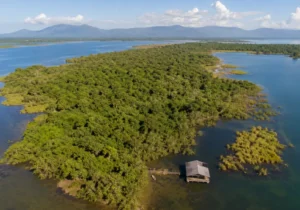
South Island National Park is bordered by the vast waters of Lake Turkana, often called the “Jade Sea” for its striking emerald and turquoise hues.
As the largest desert lake in the world, Lake Turkana plays a critical role in supporting wildlife, fisheries, and bird populations throughout the region. The lake’s alkaline waters sustain a unique ecosystem that has evolved under challenging environmental conditions.
Visitors to the South Island can enjoy spectacular lakeside scenery while observing the interactions between aquatic and terrestrial ecosystems that make this UNESCO World Heritage Site so remarkable.
The island’s volcanic origin has created a distinctive ecosystem characterized by sparse vegetation, rocky terrain, and specialized wildlife adapted to harsh conditions.
Despite the challenging environment, the South Island supports a surprising variety of plant and animal life. Small shrubs, grasses, and drought-resistant vegetation provide food and shelter for birds and other wildlife species.
The island’s isolation has helped preserve its ecological integrity, making it an important refuge for breeding birds and other wildlife.
Although South Island National Park is primarily known for its birdlife, it also supports a variety of wildlife species that inhabit the island and surrounding waters.
Many animals depend on Lake Turkana’s resources for survival, while reptiles and smaller mammals have adapted to the island’s volcanic environment.
The surrounding waters of Lake Turkana are particularly important for fish populations and crocodile breeding habitats.
South Island National Park is one of East Africa’s most important bird conservation areas and a paradise for birdwatchers.
The island serves as a major breeding and nesting site for numerous resident and migratory bird species. Its location along migration routes and proximity to Lake Turkana’s productive waters create ideal conditions for large bird populations.
Bird enthusiasts can observe large colonies of waterbirds throughout the year, particularly around the island’s shoreline and sheltered bays.
South Island is internationally recognized as a critical breeding and nesting habitat for waterbirds.
The island provides safe nesting areas away from many of the threats found on the mainland. Large colonies of pelicans, terns, skimmers, and flamingos depend on the island’s protected habitats for breeding success.
This ecological role contributes significantly to the conservation value of the Lake Turkana ecosystem and highlights the importance of preserving the island’s fragile habitats.
Visitors typically access the island by boat, enjoying spectacular views of Lake Turkana during the journey.
The island offers exceptional opportunities to observe breeding colonies and migratory bird species.
Volcanic landscapes, birdlife, and lake scenery provide outstanding photography opportunities.
Visitors can observe crocodiles, reptiles, aquatic species, and bird populations throughout the island.
Guided walks allow visitors to discover volcanic formations and panoramic viewpoints.
Researchers and nature enthusiasts can learn about the island’s unique ecosystems and conservation importance.
South Island National Park forms part of the Lake Turkana National Parks UNESCO World Heritage Site, recognized globally for its ecological, geological, and scientific significance.
The UNESCO designation reflects the area’s importance for biodiversity conservation, bird breeding, and the preservation of unique volcanic landscapes. The park contributes to a broader protected area network that safeguards one of Africa’s most remarkable natural environments.
This international recognition helps support ongoing conservation efforts throughout the Lake Turkana region.
South Island National Park plays a crucial role in protecting breeding bird colonies, aquatic ecosystems, and volcanic habitats.
Conservation efforts focus on preserving nesting areas, monitoring bird populations, protecting shoreline habitats, and supporting scientific research. These initiatives help maintain the ecological health of Lake Turkana and ensure the survival of species that depend on the island.
The park’s remote location provides additional protection from many human pressures affecting other ecosystems.
Visitors to South Island National Park are required to pay entry fees administered by the Kenya Wildlife Service (KWS).
| Visitor Category | Adult | Child/Student |
|---|---|---|
| East African Citizen | KES 500 | KES 250 |
| Kenya Resident | KES 675 | KES 350 |
| Other African Citizen | USD 20 | USD 10 |
| Non-Resident | USD 40 | USD 20 |
| Service | Details |
|---|---|
| Park Management | Kenya Wildlife Service (KWS) |
| UNESCO Status | Lake Turkana National Parks UNESCO World Heritage Site |
| Location | Lake Turkana, Northern Kenya |
| Main Attractions | Volcanic landscapes, bird colonies, Lake Turkana views |
| Activities | Boat trips, birdwatching, photography, nature exploration |
| Best Time to Visit | June–September and December–March |
| Recommended Stay | 1–2 days |
| Payment Method | eCitizen and approved KWS cashless payment platforms |
Entry fees are subject to change by the Kenya Wildlife Service (KWS). Visitors should confirm current rates before travel.
The best time to visit the South Island is during the dry seasons from June to September and December to March.
These months provide favorable weather conditions for boat travel, birdwatching, photography, and exploration. Clear skies and calmer waters often improve visibility and accessibility around the island.
Visitors should be prepared for hot temperatures and strong sunlight throughout the year due to the region’s desert climate.
South Island National Park offers a truly unique wilderness experience where volcanic landscapes, pristine lake environments, and extraordinary birdlife combine to create one of Kenya’s most remarkable destinations. Its remote location, UNESCO World Heritage status, and ecological significance make it a must-visit destination for adventurous travelers, birdwatchers, and nature enthusiasts.
Whether you are interested in photography, birdwatching, geology, or simply exploring one of Africa’s most unusual national parks, South Island provides an unforgettable journey into the heart of Lake Turkana’s spectacular island ecosystem.