
Sibiloi National Park is one of Kenya’s most extraordinary protected areas, renowned for its world-famous fossil discoveries, dramatic desert landscapes, and unique wildlife habitats. Located on the northeastern shores of Lake Turkana, the park covers approximately 1,570 square kilometers and protects one of the most significant archaeological and paleontological sites in the world.
Established in 1973, Sibiloi National Park was created to preserve the rich fossil deposits of the Koobi Fora region, where some of the most important early human remains ever discovered have helped scientists understand the origins of humanity. Today, the park forms part of the Lake Turkana National Parks UNESCO World Heritage Site, recognized globally for its scientific, ecological, and cultural significance.
With its volcanic landscapes, prehistoric heritage, diverse birdlife, and remote wilderness, Sibiloi National Park offers a truly unique adventure unlike any other destination in Kenya.
Sibiloi National Park is characterized by rugged volcanic terrain, rocky outcrops, lava formations, sandy plains, and dramatic lakefront scenery. The park lies within Kenya’s arid northern frontier, where the harsh environment has remained largely unchanged for thousands of years.
The landscapes surrounding Lake Turkana create a striking contrast between the deep blue waters of the lake and the surrounding desert environment. Visitors encounter ancient basalt cliffs, fossil-rich sedimentary deposits, and expansive plains that reveal the region’s geological history.
These unique landscapes make Sibiloi one of the most visually distinctive national parks in East Africa.
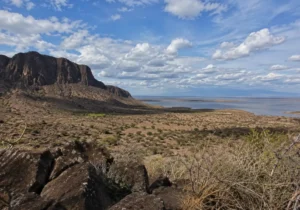
The park borders Lake Turkana, the world’s largest permanent desert lake and the largest alkaline lake on Earth. Often called the “Jade Sea” for its remarkable blue-green color, the lake is one of Kenya’s most iconic natural features.
Lake Turkana supports a variety of aquatic life and serves as an important habitat for fish, crocodiles, waterbirds, and other wildlife. The lake’s scenic shoreline provides spectacular opportunities for photography and nature exploration.
Its ecological importance and dramatic beauty contribute significantly to the park’s UNESCO World Heritage status.
The greatest claim to fame of Sibiloi National Park is the Koobi Fora fossil region, one of the most important paleoanthropological sites in the world.
Over the decades, researchers, including the renowned Leakey family, have discovered fossil remains of early human ancestors and prehistoric animals dating back millions of years. These discoveries have provided critical insights into human evolution and earned the region international scientific recognition.
Visitors can explore parts of the fossil sites and learn about the groundbreaking discoveries that have shaped our understanding of humanity’s origins.
Sibiloi National Park is often referred to as the “Cradle of Humankind” because of the extraordinary fossil evidence found within its boundaries.
Numerous fossils of early hominins, including species related to modern humans, have been uncovered in the region. The discoveries have established the Turkana Basin as one of the most important locations for the study of human evolution worldwide.
For visitors interested in archaeology, anthropology, and history, Sibiloi offers a rare opportunity to walk through landscapes that reveal humanity’s distant past.
Despite its harsh desert environment, Sibiloi National Park supports a variety of wildlife species adapted to arid conditions.
Wildlife is commonly observed near seasonal water sources, along the lakeshore, and in areas with vegetation cover. The park’s remote nature provides a true wilderness experience for adventurous travelers.
The park’s crocodile populations are particularly significant due to the important breeding habitats found around Lake Turkana.
Sibiloi National Park is a paradise for bird enthusiasts, with more than 350 recorded bird species found across its lakeshore, wetlands, and desert habitats.
The lake attracts numerous resident and migratory birds, making the park one of the most important birdwatching destinations in northern Kenya.
Birdwatching is particularly rewarding along the shores of Lake Turkana, where large concentrations of waterbirds gather throughout the year.
The Sibiloi Museum is one of the park’s most important attractions, providing visitors with valuable insights into the region’s archaeological and paleontological significance.
The museum houses fossil replicas, exhibits on human evolution, geological displays, and information about the discoveries made at Koobi Fora. It serves as an excellent introduction to the scientific importance of the area.
Visitors interested in history and anthropology often consider the museum an essential part of the Sibiloi experience.
Guided visits to the Koobi Fora fossil sites offer visitors the opportunity to learn about human evolution and prehistoric discoveries.
Travelers can observe wildlife species adapted to the region’s harsh desert conditions.
The park offers excellent birding opportunities around Lake Turkana and wetland habitats.
Volcanic landscapes, lake views, wildlife, and archaeological sites provide outstanding photography opportunities.
The Sibiloi Museum offers fascinating insights into the park’s scientific importance.
Visitors can discover unique geological formations and breathtaking desert landscapes.
Sibiloi National Park forms part of the Lake Turkana National Parks UNESCO World Heritage Site, which also includes Central Island National Park and South Island National Park.
This international recognition reflects the park’s exceptional scientific value, ecological importance, and contribution to understanding human evolution. The UNESCO designation helps support conservation efforts and promotes global awareness of the region’s significance.
The park remains one of the world’s most important archaeological and natural heritage sites.
Sibiloi National Park protects fragile ecosystems, critical wildlife habitats, and globally significant fossil resources.
Conservation efforts focus on preserving archaeological sites, safeguarding biodiversity, supporting scientific research, and promoting sustainable tourism. The park’s remote location helps maintain its wilderness character while allowing ongoing research and conservation activities.
Protecting Sibiloi ensures that future generations can continue to study and appreciate one of humanity’s most important heritage landscapes.
Visitors to Sibiloi National Park are required to pay entry fees administered by the Kenya Wildlife Service (KWS).
| Visitor Category | Adult | Child/Student |
|---|---|---|
| East African Citizen | KES 500 | KES 250 |
| Kenya Resident | KES 675 | KES 350 |
| Other African Citizen | USD 20 | USD 10 |
| Non-Resident | USD 40 | USD 20 |
| Service | Details |
|---|---|
| Park Management | Kenya Wildlife Service (KWS) |
| UNESCO Status | Lake Turkana National Parks UNESCO World Heritage Site |
| Location | Northeastern shores of Lake Turkana |
| Main Attractions | Koobi Fora, Lake Turkana, Sibiloi Museum, fossil sites |
| Activities | Fossil exploration, wildlife viewing, birdwatching, photography |
| Best Time to Visit | June–September and December–March |
| Recommended Stay | 2–3 days |
| Payment Method | eCitizen and approved KWS cashless payment platforms |
Entry fees are subject to change by the Kenya Wildlife Service (KWS). Visitors should confirm current rates before travel.
The best time to visit Sibiloi National Park is during the drier months from June to September and December to March.
These periods offer more favorable conditions for exploration, wildlife viewing, photography, and access to fossil sites. Visitors should prepare for high temperatures, strong sunlight, and remote travel conditions year-round.
Early morning and late afternoon excursions are often the most comfortable due to cooler temperatures.
Sibiloi National Park is unlike any other national park in Kenya. Combining world-renowned fossil sites, dramatic desert scenery, Lake Turkana’s breathtaking shoreline, and diverse wildlife, it offers visitors a journey through both natural history and human history.
Whether you are fascinated by archaeology, wildlife, birdwatching, photography, or adventure travel, Sibiloi National Park delivers an unforgettable experience in one of the most scientifically important landscapes on Earth. Its unique combination of UNESCO heritage, remote wilderness, and evolutionary significance makes it one of Kenya’s most remarkable destinations.