Rwenzori Mountains National Park is one of Uganda’s most spectacular natural attractions and one of Africa’s most remarkable mountain destinations. Located in western Uganda along the border with the Democratic Republic of Congo, the park covers approximately 996 square kilometers of rugged mountain terrain, glaciers, alpine meadows, valleys, and montane forests. Established as a national park in 1991 and later designated a UNESCO World Heritage Site, Rwenzori Mountains National Park protects the highest mountain range in Africa.
The park is famous for its snow capped peaks, breathtaking scenery, unique vegetation zones, and challenging trekking routes. Furthermore, the Rwenzori Mountains contain Africa’s third highest peak, Margherita Peak, which rises to 5,109 meters above sea level. As a result, the park attracts hikers, mountaineers, photographers, and nature enthusiasts from around the world.
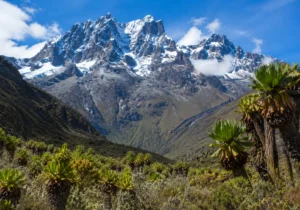
The Rwenzori Mountains are the most famous attraction within the park and among Africa’s most extraordinary mountain landscapes. Often referred to as the Mountains of the Moon, the range features towering peaks, dramatic valleys, glaciers, waterfalls, and crystal clear streams.
Margherita Peak, located on Mount Stanley, offers the ultimate challenge for adventurous hikers seeking one of Africa’s greatest mountaineering experiences. Meanwhile, lower-elevation trails offer equally rewarding opportunities to explore the park’s unique landscapes and diverse ecosystems.
Guided mountain treks allow visitors to experience the park’s stunning scenery while learning about its geology, ecology, and cultural significance.
Rwenzori Mountains National Park supports a remarkable variety of wildlife species adapted to its mountain ecosystems. Furthermore, the park’s forests, valleys, and alpine habitats provide sanctuary for numerous mammals, primates, and smaller wildlife species.
Rwenzori Mountains is one of Uganda’s premier birdwatching destinations, with more than 217 recorded bird species. Moreover, many of these species thrive within the Albertine Rift and occur in very few locations elsewhere in Africa. Consequently, the park attracts birdwatchers seeking rare and endemic mountain species.
Visitors can embark on multi-day expeditions to Margherita Peak, one of Africa’s most challenging and rewarding mountain climbs.
Guided walks through the lower slopes provide opportunities to discover wildlife, waterfalls, forests, and unique plant species.
The park offers excellent birdwatching opportunities for both amateur and experienced birders.
Community visits allow visitors to learn about the traditions and lifestyles of the Bakonzo people who live around the mountains.
The dramatic mountain scenery, glaciers, waterfalls, and unique vegetation create exceptional opportunities for photography and exploration.
Visitors can explore a variety of hiking trails ranging from short nature walks to demanding high-altitude treks.
Rwenzori Mountains National Park stands among Africa’s most important conservation areas. The park protects unique mountain ecosystems, rare plant species, and important wildlife habitats, supporting exceptional biodiversity.
Furthermore, its ecological significance, stunning scenery, and unique alpine landscapes make it an important destination for conservation, research, and ecotourism.
The best time to visit the Rwenzori Mountains is during the dry seasons from June to August and December to February. During these months, hiking trails are generally easier to navigate, making trekking and mountain climbing more enjoyable.
Meanwhile, the rainy seasons create lush green landscapes and spectacular scenery. However, wet conditions can make mountain trails slippery and more challenging for hikers.
Rwenzori Mountains combines towering peaks, dramatic landscapes, unique wildlife, and unforgettable trekking adventures into one extraordinary destination. Whether you enjoy mountain climbing, birdwatching, nature photography, or hiking, the park offers one of Africa’s most remarkable wilderness experiences.