Queen Elizabeth National Park is Uganda’s most popular safari destination and one of the most biodiverse protected areas in Africa. Covering approximately 1,978 square kilometers, the park stretches across western Uganda between Lake George and Lake Edward, with the Kazinga Channel connecting the two water bodies. Established in 1952 and renamed in honor of Queen Elizabeth II following her 1954 visit to Uganda, the park has become one of East Africa’s premier wildlife destinations.
The park’s remarkable landscape includes sprawling savannah plains, volcanic craters, tropical forests, wetlands, lakes, and river systems. These diverse habitats support an extraordinary concentration of wildlife and birdlife, making Queen Elizabeth National Park a must-visit destination for nature enthusiasts, photographers, and safari travelers.
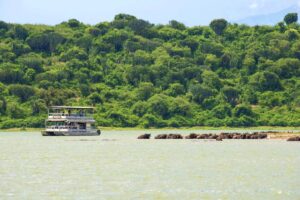
The Kazinga Channel is one of the park’s most iconic attractions and one of the best places in Africa to observe wildlife from the water. This natural channel stretches approximately 32 kilometers, linking Lake George and Lake Edward.
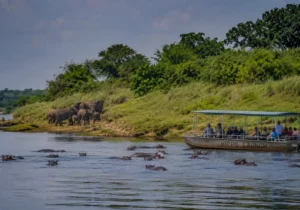
The channel attracts large concentrations of wildlife year-round. Visitors can witness elephants, buffalo, hippos, crocodiles, and numerous bird species gathering along its shores. Boat cruises on the Kazinga Channel offer some of the most rewarding wildlife viewing experiences in Uganda and provide exceptional opportunities for photography.
Queen Elizabeth National Park is home to over 95 mammal species, making it one of Uganda’s richest wildlife destinations.
Queen Elizabeth National Park is one of Africa’s top birdwatching destinations with more than 620 recorded bird species, one of the highest bird counts of any national park on the continent.
Morning and evening game drives through Kasenyi Plains and other wildlife-rich areas provide opportunities to spot lions, elephants, buffaloes, antelopes, and leopards.
Boat safaris along the Kazinga Channel offer close encounters with hippos, crocodiles, elephants, buffaloes, and hundreds of bird species.
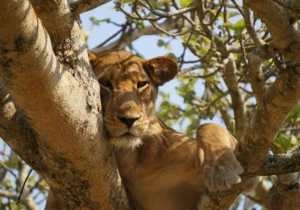
The Ishasha Sector is internationally famous for its unique population of tree-climbing lions, often seen resting in large fig trees.
Kyambura Gorge offers exciting chimpanzee-tracking experiences within a dramatic forested valley, often referred to as the Valley of Apes.
The park contains numerous volcanic crater lakes that provide stunning scenery and excellent photography opportunities.
The diverse landscapes of savannah, lakes, forests, and volcanic features create exceptional opportunities for photography and guided nature walks.
Queen Elizabeth National Park sits within the western branch of the East African Rift Valley, creating one of Uganda’s most spectacular natural landscapes. The park’s volcanic craters, rolling plains, lakes, and mountain backdrops provide some of the finest safari scenery in East Africa.
The nearby Rwenzori Mountains further enhance the park’s beauty, creating dramatic views across the horizon and contributing to the area’s rich biodiversity.
The best time to visit Queen Elizabeth National Park is during the dry seasons from June to August and December to February. During these months, wildlife gathers around water sources, making game viewing easier and more productive.
The rainy seasons transform the park into a lush green wilderness and provide excellent birdwatching opportunities as migratory birds arrive. Although some roads may become challenging, the scenery becomes particularly beautiful for photography.
Queen Elizabeth National Park combines remarkable wildlife, spectacular scenery, diverse ecosystems, and unforgettable safari experiences into one extraordinary destination. Whether you are interested in game drives, birdwatching, chimpanzee tracking, or boat safaris, the park offers one of the most complete safari experiences in Africa.