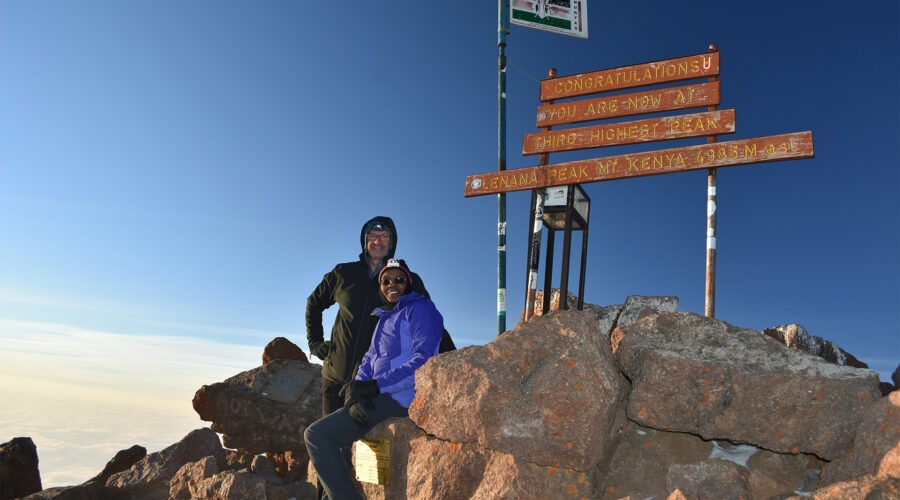
Mount Kenya National Park is one of Kenya’s most iconic protected areas, renowned for its breathtaking mountain scenery, diverse ecosystems, and world-class trekking opportunities. Located in central Kenya, the park protects the slopes and peaks of Mount Kenya, Africa’s second-highest mountain after Mount Kilimanjaro. Rising to 5,199 meters above sea level, Mount Kenya is a UNESCO World Heritage Site and one of East Africa’s most important natural landmarks.
Established as a national park in 1949, Mount Kenya National Park covers approximately 715 square kilometers and forms part of the larger Mount Kenya Forest Reserve. The park is famous for its snow-capped peaks, glaciers, alpine meadows, bamboo forests, and abundant wildlife, attracting hikers, climbers, photographers, and nature lovers from around the world.
Whether you are seeking a challenging summit trek or simply wish to experience Kenya’s stunning mountain landscapes, Mount Kenya National Park offers an unforgettable adventure.
At the heart of the park stands Mount Kenya, an extinct stratovolcano formed millions of years ago through volcanic activity. Over time, glacial erosion sculpted the mountain into the dramatic peaks, valleys, and ridges visible today.
The mountain has three main peaks:
The mountain’s rugged beauty and snow-capped summits make it one of Africa’s most spectacular climbing destinations.
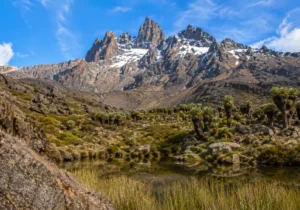
Mount Kenya National Park was designated a UNESCO World Heritage Site in 1997 due to its outstanding natural beauty and ecological significance.
The mountain supports unique ecosystems that vary dramatically with altitude, ranging from dense forests at lower elevations to alpine moorlands and glaciers near the summit. These habitats support numerous plant and animal species found nowhere else on Earth.
The UNESCO designation recognizes the park’s importance for biodiversity conservation, water catchment protection, and sustainable tourism.
One of the most fascinating aspects of Mount Kenya National Park is its wide range of ecosystems. As visitors ascend the mountain, they pass through several distinct vegetation zones.
The lower slopes feature dense montane forests dominated by cedar, podo, and olive trees. Higher elevations contain bamboo forests, giant heather zones, and moorlands filled with unique giant lobelias and groundsels.
Near the summit, alpine vegetation gives way to rocky terrain, glaciers, and permanent snowfields. This incredible diversity of habitats contributes significantly to the park’s ecological importance.
Mount Kenya National Park supports a wide variety of wildlife species that inhabit its forests, grasslands, and mountain ecosystems. While wildlife viewing is often secondary to trekking, visitors may encounter numerous animals during their explorations.
The park’s protected forests provide essential habitat for many mammals and bird species, contributing to the region’s biodiversity.
Wildlife sightings are particularly common in the forested lower slopes and around water sources.
Mount Kenya National Park is a premier destination for birdwatching, with more than 130 recorded bird species inhabiting the mountain’s forests and alpine habitats.
The park attracts bird enthusiasts seeking both endemic and high-altitude species. Different elevations provide opportunities to observe a variety of birds adapted to unique ecological conditions.
Birdwatching is particularly rewarding during the early morning hours when activity levels are highest.
Mount Kenya National Park offers some of Africa’s most rewarding trekking experiences. Several routes lead visitors through different landscapes and ecosystems toward the mountain’s peaks.
Each route provides unique perspectives of the mountain and varying levels of challenge for hikers and climbers.
Beyond the mountain peaks, Mount Kenya National Park features numerous scenic attractions that enhance the visitor experience.
Highlights include:
These attractions provide excellent opportunities for photography, hiking, and nature appreciation.
The park is one of Africa’s premier trekking destinations, attracting adventurers from around the world.
Experienced climbers can attempt technical ascents of Batian and Nelion peaks.
Visitors can observe forest wildlife while exploring lower-elevation trails.
The mountain’s diverse habitats support numerous unique bird species.
Snow-capped peaks, lakes, waterfalls, and wildlife create exceptional photography opportunities.
Several campsites and mountain huts allow visitors to experience the park’s wilderness overnight.
Mount Kenya serves as one of Kenya’s most important water towers, supplying water to millions of people and supporting agriculture, wildlife, and ecosystems across the country.
The mountain’s forests capture rainfall and regulate water flow into major rivers, including the Tana River and Ewaso Ng’iro River. Protecting these ecosystems is essential for maintaining water security and environmental sustainability.
This ecological role makes conservation efforts within the park particularly important.
Mount Kenya plays a critical role in conserving biodiversity and protecting fragile mountain ecosystems.
Conservation initiatives focus on forest protection, wildlife monitoring, habitat restoration, and sustainable tourism management. Efforts to reduce illegal logging, poaching, and environmental degradation help preserve the mountain’s natural heritage.
The park remains a model for balancing conservation and tourism while safeguarding one of Africa’s most important mountain ecosystems.
Visitors to Mount Kenya National Park are required to pay entry fees administered by the Kenya Wildlife Service (KWS).
| Visitor Category | Adult | Child/Student |
|---|---|---|
| East African Citizen | KES 800 | KES 400 |
| Kenya Resident | KES 1,100 | KES 550 |
| Other African Citizen | USD 30 | USD 15 |
| Non-Resident | USD 70 | USD 35 |
| Service | Details |
|---|---|
| Park Management | Kenya Wildlife Service (KWS) |
| UNESCO Status | UNESCO World Heritage Site |
| Best Time to Visit | January–March and June–October |
| Main Attractions | Point Lenana, alpine lakes, glaciers, trekking routes |
| Activities | Hiking, climbing, birdwatching, photography, camping |
| Recommended Stay | 2–5 days |
| Accessibility | Accessible by road from Nanyuki, Chogoria, and Naro Moru |
| Payment Method | eCitizen and approved KWS cashless payment platforms |
Entry fees are subject to change by the Kenya Wildlife Service (KWS). Visitors should confirm current rates before travel.
The best time to visit Mount Kenya is during the dry seasons from January to March and June to October.
These months offer clearer skies, better trail conditions, and excellent visibility for trekking and photography. Climbers attempting Point Lenana or the technical peaks generally prefer these periods due to favorable weather.
The wetter seasons bring lush vegetation and vibrant landscapes, but may create more challenging trekking conditions.
Mount Kenya National Park combines towering peaks, diverse ecosystems, rich wildlife, and unforgettable trekking experiences into one of Africa’s premier mountain destinations. From the snow-capped summits of Batian and Nelion to the scenic beauty of Point Lenana, alpine lakes, and forest trails, the park offers something for every nature enthusiast and adventurer.
Whether you are seeking a challenging climb, exceptional birdwatching, stunning photography, or simply an escape into one of Kenya’s most beautiful landscapes, Mount Kenya National Park delivers an experience that is both inspiring and unforgettable.