Marsabit National Park is one of Kenya’s most fascinating and contrasting protected areas, offering visitors a unique blend of lush mountain forests, volcanic landscapes, crater lakes, and abundant wildlife in the heart of the country’s arid north. Located in Marsabit County, the park surrounds the forested slopes of Mount Marsabit, a dormant volcanic mountain that rises dramatically above the surrounding desert plains.
Established as a national park in 1949, Marsabit National Park covers approximately 1,554 square kilometers and serves as a vital ecological refuge for wildlife and local communities. The park’s cool forests, permanent water sources, and scenic crater lakes create an oasis-like environment that supports a remarkable diversity of plants and animals rarely found in northern Kenya’s dry landscapes.
Known for its giant tusker elephants, rich birdlife, and breathtaking scenery, Marsabit National Park offers travelers a unique safari experience far from Kenya’s more crowded wildlife destinations.
Marsabit National Park is defined by its extraordinary contrast between dense mountain forests and the vast arid plains that surround it. Rising more than 1,700 meters above sea level, Mount Marsabit creates a cooler and wetter microclimate that supports thick vegetation and permanent water sources.
The park features volcanic craters, forested hillsides, open grasslands, lava formations, and scenic viewpoints overlooking northern Kenya’s rugged wilderness. The mountain’s slopes are often covered in mist, creating a mystical atmosphere that adds to the park’s appeal.
This dramatic combination of landscapes makes Marsabit National Park one of the most visually distinctive protected areas in Kenya.
Among the park’s most famous attractions are its volcanic crater lakes, which provide essential water sources for wildlife and enhance the area’s scenic beauty.
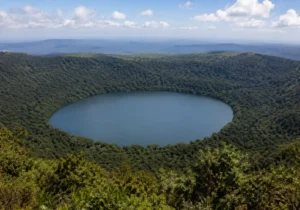
One of the best-known lakes is Lake Paradise, a picturesque crater lake surrounded by dense forest vegetation. The lake attracts numerous bird species and wildlife, making it a popular destination for nature lovers and photographers.
These crater lakes not only add to the park’s beauty but also play a crucial ecological role by supporting biodiversity in an otherwise dry region.
Mount Marsabit’s forest ecosystem is one of the park’s most valuable natural assets. The dense forest receives significantly more rainfall than the surrounding lowlands, creating a green refuge within the arid northern frontier.
The forest consists of indigenous trees, bamboo stands, shrubs, and grasslands that provide food and shelter for wildlife. Walking through the forest reveals a completely different side of northern Kenya, with cool temperatures, rich vegetation, and abundant birdlife.
This mountain oasis supports species that depend on permanent water and forest habitats, making it an important conservation area.
Marsabit National Park supports a variety of wildlife species that thrive within its forests, grasslands, and crater lake environments. The park has long been famous for its large elephants, including the legendary giant tuskers that once roamed the region.
Wildlife viewing can be rewarding throughout the park, particularly around water sources and forest clearings where animals gather to drink and feed.
The park’s location in northern Kenya also provides opportunities to observe species associated with the region’s unique ecosystems.
Marsabit National Park is a hidden paradise for birdwatchers, with more than 350 recorded bird species inhabiting its forests, lakes, and surrounding landscapes.
The combination of highland forests, crater lakes, and open plains creates diverse habitats that support both resident and migratory birds. Birdwatching is particularly rewarding around Lake Paradise and within the forested areas of Mount Marsabit.
The park’s rich birdlife makes it one of northern Kenya’s most rewarding birdwatching destinations.
Lake Paradise is the most famous landmark within Marsabit National Park and one of the most scenic crater lakes in Kenya.
Surrounded by lush forest and volcanic hills, the lake provides a peaceful environment where visitors can observe birds, wildlife, and beautiful reflections across the water. Historically, the lake was known for attracting large elephant herds and remains an important ecological feature of the park.
The combination of tranquil waters and forest scenery makes Lake Paradise a highlight of any visit.
Visitors can explore the park’s forests, grasslands, and crater lakes while searching for wildlife.
The park’s diverse habitats provide excellent opportunities to observe a wide variety of bird species.
The crater lakes, forests, wildlife, and mountain scenery create exceptional photography opportunities.
Travelers can discover volcanic landscapes, forest trails, and panoramic viewpoints overlooking northern Kenya.
The park offers opportunities to observe elephants, buffaloes, giraffes, and numerous other species.
Guided visits help visitors understand the park’s unique ecosystems and conservation significance.
The Marsabit region is home to several indigenous communities, including the Rendille, Borana, Gabra, and Samburu peoples.
These communities have lived alongside the region’s wildlife and natural resources for generations, developing unique traditions and cultural practices adapted to northern Kenya’s challenging environment.
Visitors interested in cultural tourism can gain valuable insights into local heritage, pastoral lifestyles, and community conservation initiatives that support sustainable coexistence between people and wildlife.
Marsabit National Park plays a crucial role in conserving northern Kenya’s biodiversity and protecting important forest and water catchment ecosystems.
The park safeguards critical wildlife habitats, supports endangered species, and helps maintain ecological balance in a region vulnerable to drought and environmental change. Conservation efforts focus on habitat protection, wildlife monitoring, anti-poaching initiatives, and community engagement.
Its forests also contribute to water security for local communities and wildlife throughout the surrounding region.
Visitors to Marsabit National Park are required to pay entry fees administered by the Kenya Wildlife Service (KWS). Rates may change periodically, so travelers should confirm current charges before their visit.
| Visitor Category | Adult | Child/Student |
|---|---|---|
| East African Citizen | KES 500 | KES 250 |
| Kenya Resident | KES 675 | KES 350 |
| Other African Citizen | USD 20 | USD 10 |
| Non-Resident | USD 40 | USD 20 |
The best time to visit Marsabit National Park is during the dry seasons from June to October and December to March.
These months provide favorable conditions for wildlife viewing, photography, and exploration. Wildlife tends to congregate around water sources, making sightings easier and more frequent.
The wetter months bring lush vegetation and excellent birdwatching opportunities, enhancing the beauty of the forested landscapes and crater lakes.
Marsabit National Park is a remarkable destination where lush forests, volcanic landscapes, crater lakes, and abundant wildlife come together to create one of Kenya’s most distinctive safari experiences. Rising above the surrounding desert plains, Mount Marsabit provides a refreshing oasis that supports a rich diversity of life and offers visitors an opportunity to explore a side of Kenya that few travelers experience.
Whether you are interested in wildlife viewing, birdwatching, photography, geology, or cultural exploration, Marsabit National Park delivers an unforgettable adventure in one of East Africa’s most unique natural environments. Its combination of ecological importance, scenic beauty, and wilderness appeal makes it a hidden gem worthy of discovery.