Lake Nakuru National Park is one of Kenya’s most celebrated wildlife destinations, renowned for its spectacular birdlife, thriving rhino populations, and breathtaking Rift Valley landscapes. Located approximately 160 kilometers northwest of Nairobi in Nakuru County, the park surrounds the beautiful Lake Nakuru, a shallow alkaline lake that has long been famous for attracting thousands of flamingos and other water birds.
Established as a national park in 1961, Lake Nakuru National Park covers approximately 188 square kilometers and is one of Kenya’s most accessible and rewarding safari destinations. The park protects diverse habitats including alkaline lake shores, acacia woodlands, grasslands, rocky escarpments, and riverine forests, supporting a remarkable variety of wildlife.
Recognized internationally for its ecological importance, Lake Nakuru forms part of the Kenya Lake System in the Great Rift Valley UNESCO World Heritage Site, making it a must-visit destination for nature lovers, birdwatchers, photographers, and safari enthusiasts.
At the heart of the park lies Lake Nakuru, one of the most iconic lakes within the Great Rift Valley. The shallow alkaline waters support abundant algae and aquatic organisms, creating an important feeding ground for numerous bird species.
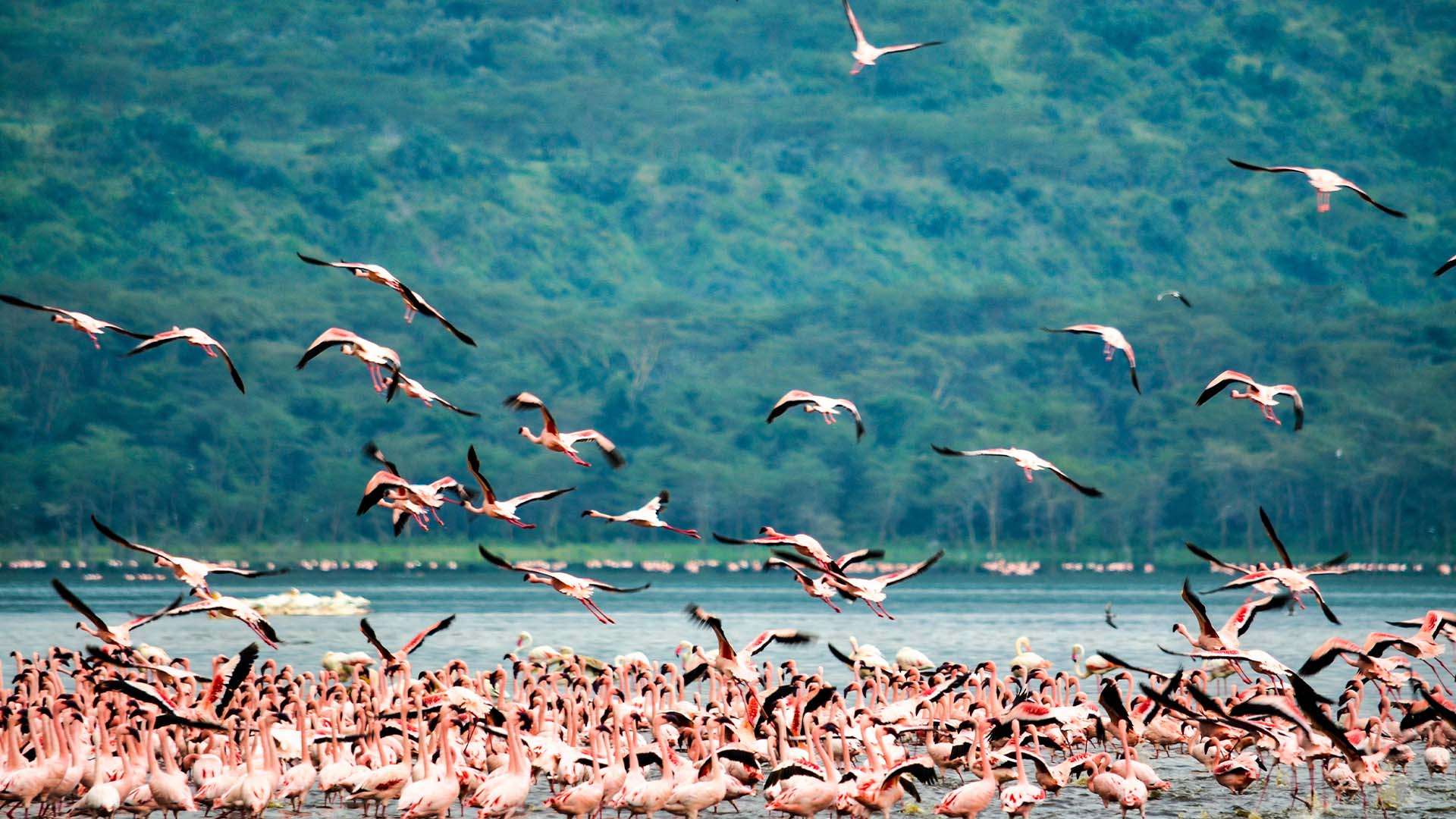
Historically, the lake became world-famous for hosting massive flocks of flamingos that often transformed the shoreline into a vibrant pink spectacle visible from great distances. Although flamingo numbers naturally fluctuate depending on water levels and food availability, the lake continues to attract large populations of waterbirds throughout the year.
The combination of shimmering waters, surrounding forests, and dramatic escarpments creates a stunning landscape that makes Lake Nakuru one of Kenya’s most photogenic natural attractions.
Lake Nakuru National Park has long been recognized as one of Africa’s premier flamingo destinations. The lake supports both Greater Flamingos and Lesser Flamingos, which feed on algae and microscopic organisms found within the alkaline waters.
Seasonal variations influence flamingo populations, and visitors may encounter thousands of birds gathered along the shoreline during favorable conditions. Their vibrant pink plumage creates a breathtaking visual display against the blue waters and green surroundings.
Beyond flamingos, the lake supports numerous other aquatic bird species, making it one of the most important birdwatching destinations in East Africa.
Lake Nakuru National Park is one of Kenya’s most successful rhino conservation areas and serves as an important sanctuary for both black rhinos and white rhinos.
The park’s protected environment, secure fencing, and active conservation programs have contributed significantly to the recovery of rhino populations. Visitors have an excellent chance of observing these endangered animals in their natural habitat, making the park one of the best places in Kenya for rhino viewing.
The success of rhino conservation at Lake Nakuru highlights the park’s crucial role in preserving some of Africa’s most threatened wildlife species.
Although famous for birds and rhinos, Lake Nakuru National Park supports an impressive diversity of wildlife. The park’s varied habitats provide suitable conditions for numerous mammal species, making game drives highly rewarding.
The relatively compact size of the park allows visitors to enjoy excellent wildlife viewing within a short period, increasing the likelihood of memorable sightings.
The park is also one of the best locations in Kenya to observe the endangered Rothschild’s giraffe, which has been successfully reintroduced and protected here.
Lake Nakuru National Park is a paradise for bird enthusiasts, with more than 450 recorded bird species. The diversity of habitats, including lake shores, wetlands, forests, and grasslands, attracts an extraordinary variety of resident and migratory birds.
Birdwatchers can enjoy sightings throughout the year, with different species appearing according to seasonal conditions and migration patterns.
The abundance of birdlife makes the park one of Africa’s finest birdwatching destinations.
One of the most popular attractions within Lake Nakuru National Park is Baboon Cliff, a spectacular viewpoint overlooking the lake and surrounding landscapes.
Visitors can enjoy panoramic views of the shimmering waters, wildlife-filled plains, and dramatic Rift Valley escarpments. The viewpoint is particularly stunning during sunrise and sunset when changing light conditions enhance the beauty of the landscape.
Baboon Cliff is also a favorite location for photographers seeking wide-angle views of the park’s diverse habitats.
Located in the southern section of the park, Makalia Falls offers visitors a peaceful and scenic retreat away from the more frequently visited areas.
The waterfall cascades through rocky terrain, creating a refreshing contrast to the surrounding savannah landscapes. During the rainy season, the falls become particularly impressive as increased water flow enhances their beauty.
The area surrounding Makalia Falls is ideal for photography, picnics, and enjoying the natural tranquility of the park.
Game drives provide excellent opportunities to observe rhinos, lions, giraffes, buffaloes, and numerous other wildlife species.
The park’s extraordinary bird diversity makes it a premier destination for bird enthusiasts.
Visitors can enjoy some of Kenya’s best rhino viewing experiences within the park’s protected sanctuary.
Flamingos, wildlife, waterfalls, and scenic viewpoints create outstanding photography opportunities.
The park’s varied ecosystems offer rewarding opportunities for nature observation and ecological discovery.
Viewpoints such as Baboon Cliff provide breathtaking panoramas of the lake and surrounding Rift Valley landscapes.
Lake Nakuru National Park forms part of the Kenya Lake System in the Great Rift Valley UNESCO World Heritage Site, alongside Lake Bogoria and Lake Elementaita.
This international recognition highlights the ecological importance of the region’s alkaline lakes, which support globally significant bird populations and unique ecosystems. The UNESCO designation underscores the need to protect these habitats for future generations.
The park’s contribution to biodiversity conservation makes it one of East Africa’s most important protected areas.
Lake Nakuru National Park has become a model for successful wildlife conservation in Kenya. Efforts to protect rhinos, giraffes, and other vulnerable species have produced significant conservation achievements over the years.
Habitat restoration programs, anti-poaching measures, ecological monitoring, and community engagement initiatives continue to support the park’s biodiversity. These efforts ensure that future generations can continue to enjoy the park’s remarkable wildlife and natural beauty.
The park remains an important center for conservation research and environmental education.
The best time to visit Lake Nakuru National Park is during the dry seasons from June to October and January to March.
During these months, wildlife is easier to locate as animals gather around water sources, and road conditions are generally favorable for safari activities. Clear skies also enhance photography opportunities and scenic viewing.
The rainy seasons bring lush vegetation and excellent birdwatching conditions, although some areas may become more challenging to access.
Lake Nakuru National Park combines stunning landscapes, extraordinary birdlife, thriving rhino populations, and rich biodiversity into one of Kenya’s most rewarding safari destinations. From the famous flamingo-lined shores of Lake Nakuru to the scenic beauty of Baboon Cliff and Makalia Falls, the park offers unforgettable experiences for visitors of all interests.
Whether you are passionate about birdwatching, wildlife photography, conservation, or traditional game viewing, Lake Nakuru National Park provides a remarkable opportunity to explore one of East Africa’s most iconic protected areas. Its combination of natural beauty, conservation success, and ecological significance ensures its place among Kenya’s premier safari destinations.
WhatsApp us