Kora National Park is one of Kenya’s most remote and unspoiled protected areas, offering visitors an authentic wilderness experience far from the crowds of the country’s more famous safari destinations. Located in Tana River County in eastern Kenya, the park covers approximately 1,788 square kilometers of rugged landscapes, open savannahs, riverine forests, and rocky outcrops.
Established as a national park in 1989, Kora National Park is perhaps best known as the former home of renowned conservationist George Adamson, whose efforts to rehabilitate and release lions into the wild gained international recognition. The park’s vast wilderness, rich biodiversity, and fascinating conservation history make it a unique destination for adventure travelers, wildlife enthusiasts, and nature lovers.
Bordered by the majestic Tana River, Kenya’s longest river, Kora National Park supports a variety of wildlife species and offers a glimpse into one of the country’s least-explored natural landscapes.
Kora National Park is characterized by dramatic scenery that combines vast plains, rocky hills, seasonal rivers, and dense riverine vegetation. The landscape is shaped by ancient geological processes that have created a rugged and diverse environment.
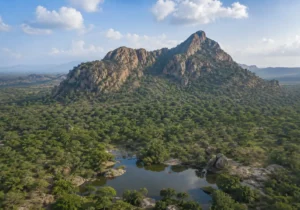
One of the park’s most striking features is the presence of large granite inselbergs, including Mansumbi, Kumbulanwa, and Kora Rock, which rise prominently above the surrounding plains. These rocky formations provide stunning viewpoints and add to the park’s distinctive character.
The Tana River forms part of the park’s boundary and creates a lifeline for wildlife, supporting lush vegetation that contrasts beautifully with the surrounding semi-arid terrain. The combination of rivers, rocky outcrops, and open grasslands creates exceptional opportunities for exploration and photography.
Kora National Park holds a special place in conservation history due to its association with George Adamson, one of Africa’s most famous wildlife conservationists.
After gaining international fame through the story of Elsa the Lioness, chronicled in Born Free, Adamson moved to Kora and dedicated his life to rehabilitating and releasing captive lions into the wild. His camp, known as Kampi ya Simba, remains an important historical site within the park.
Visitors can explore the area where Adamson lived and worked, gaining insight into his remarkable conservation efforts and his lasting impact on wildlife preservation in Kenya.
The Tana River is one of the park’s most important natural features and plays a crucial role in sustaining life within the region. Flowing along the western boundary of the park, the river provides water for wildlife and supports rich riverine forests.
These fertile habitats attract a wide range of animals, birds, and aquatic species that depend on the river for survival. The contrast between the lush riverbanks and the surrounding dry landscapes creates a unique ecological environment that contributes significantly to the park’s biodiversity.
The river also offers scenic viewpoints and peaceful locations for nature observation and photography.
Kora National Park supports a variety of wildlife species adapted to the region’s semi-arid environment. Although wildlife populations are still recovering from historical challenges such as poaching, conservation efforts continue to strengthen the park’s ecological health.
The park’s vast wilderness and relatively low visitor numbers provide excellent opportunities for intimate wildlife encounters in a natural setting.
Visitors may also encounter numerous smaller mammals, reptiles, and aquatic species throughout the park.
Kora National Park offers rewarding birdwatching opportunities thanks to its diverse habitats, including riverine forests, savannahs, wetlands, and rocky outcrops.
The Tana River attracts many water-associated bird species, while the surrounding plains and woodland areas support a variety of raptors and terrestrial birds.
Birdwatchers can enjoy sightings throughout the year, with different habitats providing diverse birding experiences.
One of the most iconic landmarks in the park is Kora Rock, a massive granite outcrop that rises prominently above the surrounding landscape.
The rock offers spectacular panoramic views across the park and serves as a reminder of the geological forces that shaped the region. Visitors who climb to elevated viewpoints are rewarded with breathtaking vistas of plains, forests, and distant hills.
These scenic locations are particularly popular among photographers seeking dramatic landscapes and unforgettable sunrise or sunset views.
Game drives provide opportunities to explore the park’s remote wilderness and observe wildlife in a natural environment.
Visitors can search for elephants, lions, giraffes, antelope species, and other animals throughout the park.
The diverse habitats support excellent birdwatching opportunities for both beginner and experienced birders.
The park’s rugged landscapes, wildlife, and river ecosystems create exceptional photographic opportunities.
Visitors can explore George Adamson’s former camp and learn about the park’s important conservation history.
Rocky outcrops, riverine forests, and open plains provide rewarding opportunities for nature exploration and sightseeing.
Kampi ya Simba, meaning “Camp of the Lions,” is one of the most historically significant sites in Kora National Park.
This camp served as George Adamson’s base during his lion rehabilitation work and remains a symbol of his dedication to wildlife conservation. Visitors can learn about his pioneering efforts, his relationship with lions, and the challenges he faced while protecting wildlife.
The site offers a unique connection to one of Africa’s most influential conservation stories.
Kora National Park forms part of an important conservation network that protects wildlife and ecosystems in eastern Kenya.
Ongoing conservation efforts focus on habitat restoration, anti-poaching initiatives, wildlife monitoring, and community engagement. These efforts have contributed to the gradual recovery of wildlife populations and improved ecosystem health throughout the park.
The park’s remote location and vast wilderness make it an important refuge for species that require large, undisturbed habitats.
The best time to visit Kora National Park is during the dry seasons from June to October and January to March.
During these months, wildlife is generally easier to spot as animals gather near permanent water sources. Road conditions are also more favorable, making it easier to explore the park’s remote areas.
The rainy seasons bring greener landscapes and excellent birdwatching opportunities, although some roads may become challenging to navigate.
Kora National Park is a remarkable destination that combines untamed wilderness, rich conservation history, diverse wildlife, and breathtaking landscapes. From the scenic Tana River and towering granite outcrops to George Adamson’s historic lion camp, the park offers a unique safari experience that differs significantly from Kenya’s more visited national parks.
Whether you are interested in wildlife viewing, birdwatching, photography, conservation history, or exploring remote natural landscapes, Kora National Park provides an unforgettable journey into one of Kenya’s most authentic wilderness areas. Its combination of ecological significance, historical importance, and rugged beauty makes it a hidden gem waiting to be discovered.