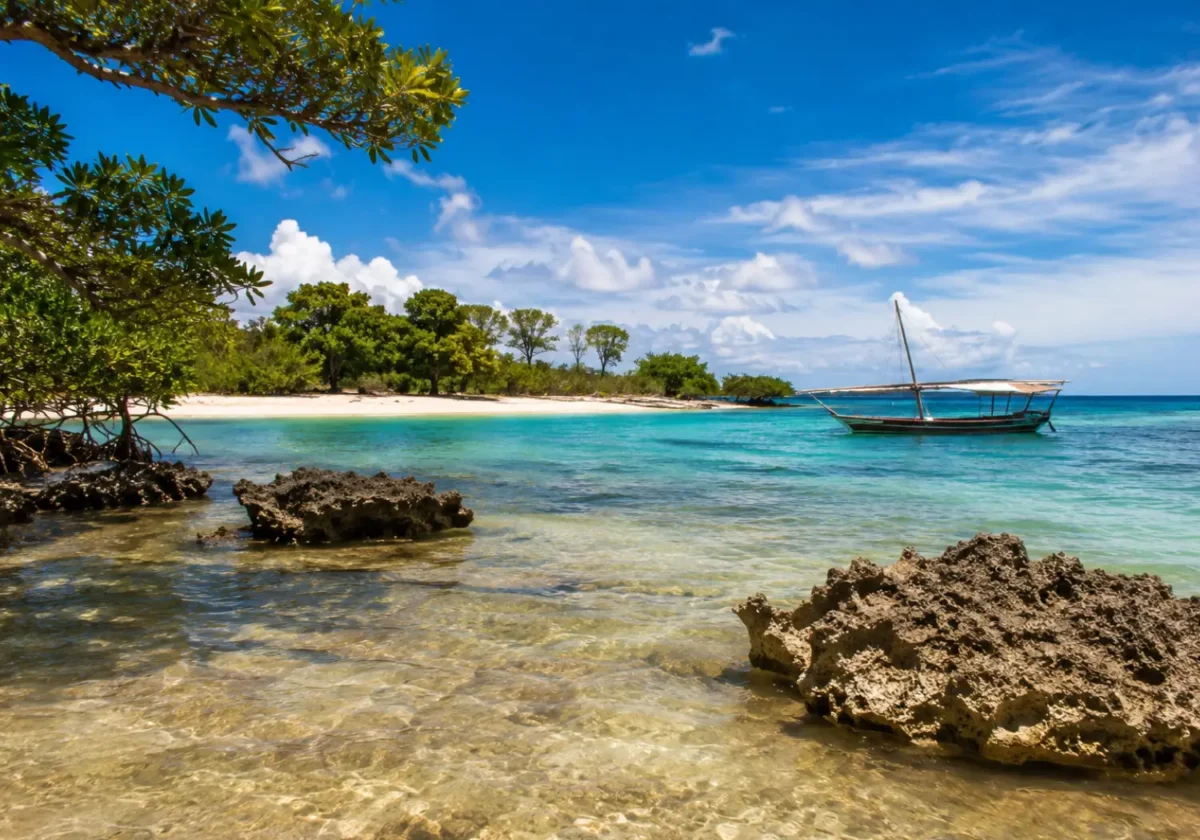
Kiunga Marine National Reserve is one of Kenya’s most pristine and least-explored marine protected areas. Located along the country’s far northern coastline in Lamu County, near the border with Somalia, the reserve protects an extraordinary network of coral reefs, mangrove forests, seagrass beds, islands, and coastal waters within the Indian Ocean.
Established in 1979, the Kiunga Marine National Reserve covers approximately 250 square kilometers and forms part of the larger Kiunga Biosphere Reserve, a globally important conservation area recognized for its exceptional biodiversity. The reserve is renowned for its untouched marine ecosystems, sea turtles, dolphins, vibrant coral reefs, and rich birdlife.
For travelers seeking a unique coastal adventure away from crowded beach destinations, Kiunga offers one of the most authentic marine experiences in East Africa.
Kiunga Marine National Reserve is situated along Kenya’s northern coastline in Lamu County, stretching from Kiunga southward toward the Dodori Creek area.
The reserve consists of a chain of offshore islands, coral reefs, lagoons, and coastal habitats bordering the Indian Ocean. Its remote location has helped preserve its natural beauty and ecological integrity, making it one of the most unspoiled marine environments in Kenya.
Access is typically by boat from Kiunga and nearby coastal settlements.
Kiunga plays a critical role in protecting Kenya’s northern coastal ecosystems and marine biodiversity.
The reserve safeguards important coral reefs, seagrass meadows, mangrove forests, and breeding grounds for endangered marine species. It also supports local fishing communities by helping maintain healthy fish populations and marine habitats.
Its ecological significance has made it one of Kenya’s most valuable marine conservation areas.
The reserve supports an impressive variety of marine life, making it a paradise for snorkelers, divers, photographers, and nature enthusiasts.
The protected waters provide habitat for numerous fish species, marine mammals, and reptiles that depend on healthy coral reef ecosystems.
Sea turtle conservation programs within the reserve are particularly important for protecting endangered populations.
Kiunga is also an excellent birdwatching destination, particularly for coastal and seabird species.
Its islands, mangrove forests, mudflats, and beaches provide important feeding and nesting habitats for resident and migratory birds.
The reserve is internationally recognized as an important stopover site for migratory birds traveling along the East African flyway.
Kiunga stands out because of its remarkable isolation and relatively untouched ecosystems.
Unlike Kenya’s more developed coastal destinations, Kiunga remains largely unspoiled by mass tourism. Its coral reefs are among the healthiest in the country, while its extensive mangrove forests and island habitats support exceptional biodiversity.
The reserve is also part of the larger Kiunga Biosphere Reserve, highlighting its global conservation importance.
Visitors can enjoy a variety of marine and nature-based activities throughout the reserve.
Explore vibrant coral reefs filled with colorful fish and marine life.
Discover underwater ecosystems, coral gardens, and diverse marine species.
Boat excursions often provide opportunities to observe dolphins in their natural habitat.
Observe coastal and migratory bird species across islands and mangrove habitats.
Capture stunning images of coral reefs, marine wildlife, and coastal landscapes.
Visit remote islands and experience the untouched beauty of Kenya’s northern coast.
Coral reefs are the foundation of the Kiunga Marine National Reserve’s ecosystem.
These reefs provide food, shelter, and breeding grounds for countless marine species. They also protect the coastline from erosion and contribute to local fisheries that support coastal communities.
Protecting the reefs is essential for maintaining biodiversity and ensuring the long-term health of the reserve.
Visitors to Kiunga are required to pay conservation fees that support marine protection and park management.
| Visitor Category | Adult | Child/Student |
|---|---|---|
| East African Citizen | KES 500 | KES 250 |
| Kenya Resident | KES 675 | KES 350 |
| Other African Citizen | USD 15 | USD 10 |
| Non-Resident | USD 25 | USD 15 |
Entry fees are subject to change. Visitors should confirm current rates before travel.
The best time to visit Kiunga is during the dry seasons from July to October and December to March.
During these months, sea conditions are generally calmer, visibility for snorkeling and diving is excellent, and marine wildlife encounters are more frequent. The warm tropical climate allows for year-round exploration, although weather conditions can vary.
Birdwatching is particularly rewarding during migratory seasons when large numbers of seabirds visit the reserve.
Kiunga Marine National Reserve is a hidden coastal gem where pristine coral reefs, crystal-clear waters, mangrove forests, and abundant marine life combine to create one of Kenya’s most remarkable conservation areas. Its remote location, rich biodiversity, and unspoiled beauty offer visitors a rare opportunity to experience the Indian Ocean in its most natural state.
Whether you are interested in diving, snorkeling, birdwatching, marine wildlife, or eco-tourism, Kiunga provides an unforgettable journey into one of East Africa’s most important marine ecosystems.
WhatsApp us