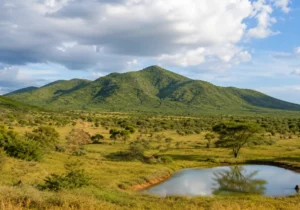
Chyulu Hills National Park is one of Kenya’s most scenic and least-explored protected areas, offering visitors a unique blend of volcanic landscapes, rolling green hills, diverse wildlife, and breathtaking views of Mount Kilimanjaro. Located in southeastern Kenya between Tsavo West National Park and Amboseli National Park, the park protects part of the spectacular Chyulu Hills mountain range, a series of ancient volcanic cones and lava flows stretching across the landscape.
Established as a national park in 1983, Chyulu Hills National Park covers approximately 741 square kilometers and forms an important wildlife corridor connecting some of Kenya’s most famous conservation areas. The park is renowned for its lush vegetation, underground lava tubes, crystal-clear springs, and panoramic scenery that contrasts dramatically with the surrounding savannah.
The hills inspired famous author Ernest Hemingway, who described them as the “Green Hills of Africa,” and today they remain one of Kenya’s hidden gems for nature lovers, photographers, hikers, and adventure travelers seeking a quieter safari experience.
The volcanic landscapes of Chyulu Hills National Park are among the most remarkable geological features in East Africa. Formed by volcanic activity over hundreds of thousands of years, the hills consist of rolling lava formations, volcanic cones, craters, and vast underground cave systems.
Unlike many volcanic regions that appear barren, the Chyulu Hills are covered with dense vegetation, creating a stunning green landscape that stretches across the horizon. The combination of volcanic soils and seasonal rainfall supports forests, grasslands, and woodlands that provide habitats for numerous wildlife species.
Visitors exploring the park can enjoy spectacular viewpoints overlooking the surrounding plains, with clear-day views extending toward Mount Kilimanjaro, Tsavo, and Amboseli. The unique geological formations make the park a fascinating destination for both adventure seekers and nature enthusiasts.
One of the most extraordinary attractions within Chyulu Hills National Park is the Leviathan Cave, one of the longest lava tube systems in Africa.
Created by flowing lava during volcanic eruptions, the cave stretches for several kilometers beneath the hills. The underground tunnels showcase the powerful geological forces that shaped the region and provide an exciting destination for adventurous visitors.
Exploring parts of the cave system offers a rare opportunity to witness ancient volcanic formations, lava chambers, and underground passages. Guided excursions help visitors understand the geological history of the Chyulu Hills while ensuring safe exploration of the cave environment.
Chyulu Hills National Park supports a wide variety of wildlife thanks to its diverse habitats and strategic location between major conservation areas. The park serves as an important migration corridor for animals moving between the Amboseli and Tsavo ecosystems.
The combination of forests, grasslands, and volcanic terrain provides ideal conditions for both large mammals and smaller species. Wildlife viewing may be less concentrated than in some of Kenya’s famous parks, but visitors are rewarded with a more secluded and authentic safari experience.
The park’s remote nature and low visitor numbers create excellent opportunities for peaceful wildlife encounters away from crowded safari routes.
Chyulu Hills National Park offers exceptional birdwatching opportunities throughout the year. The variety of habitats, including forests, grasslands, and wetlands, supports a rich diversity of resident and migratory bird species.
Bird enthusiasts can explore different sections of the park to observe both common and rare species while enjoying the region’s spectacular scenery.
The park’s relatively undisturbed habitats make it one of Kenya’s rewarding destinations for serious birdwatchers.
The Chyulu Hills play a critical role in supplying water to the famous Mzima Springs in Tsavo West National Park. Rainwater filters through the porous volcanic rocks of the hills and travels underground before emerging as crystal-clear springs many kilometers away.
This natural filtration system creates one of East Africa’s most important freshwater sources and supports ecosystems across the wider Tsavo region. Understanding this hydrological connection highlights the ecological importance of conserving the Chyulu Hills landscape.
Visitors often find the relationship between the hills and Mzima Springs to be one of the most fascinating aspects of the park’s environmental significance.
Game drives offer opportunities to observe wildlife while exploring the park’s diverse habitats and scenic volcanic terrain.
The rolling hills provide excellent hiking opportunities with spectacular viewpoints overlooking the surrounding landscapes.
Guided tours of the Leviathan Cave system allow visitors to discover one of Africa’s longest lava tubes.
Bird enthusiasts can enjoy rewarding sightings across the park’s forests, grasslands, and wetlands.
The combination of volcanic hills, wildlife, forests, and Mount Kilimanjaro views creates exceptional photography opportunities.
Visitors can enjoy panoramic vistas stretching across Amboseli, Tsavo, and the surrounding countryside.
One of the highlights of visiting Chyulu Hills National Park is the opportunity to witness spectacular views of Mount Kilimanjaro, Africa’s highest mountain.
During clear mornings and evenings, the snow-capped summit rises dramatically above the surrounding plains, creating unforgettable photographic moments. The contrast between the green volcanic hills and Kilimanjaro’s towering peak produces some of the most iconic landscapes in East Africa.
Photographers often consider the park one of Kenya’s best locations for capturing unique perspectives of the mountain.
Chyulu Hills National Park forms an important part of the larger Tsavo-Amboseli ecosystem, one of Africa’s most significant wildlife conservation regions.
The park provides critical habitat and migration routes for elephants and other wildlife species that move seasonally between protected areas. Conservation efforts focus on protecting biodiversity, maintaining wildlife corridors, preventing habitat degradation, and supporting local communities.
Its ecological value extends beyond its boundaries, contributing significantly to regional conservation initiatives and ecosystem stability.
The Chyulu Hills are also culturally significant to local communities, particularly the Maasai people, who have lived alongside the hills for generations.
Traditional pastoral lifestyles remain closely connected to the landscape, and many community conservation initiatives work to balance wildlife protection with sustainable livelihoods. Visitors often gain valuable insights into local traditions and the deep relationship between people and nature in this region.
The cultural heritage of the area adds another dimension to the overall visitor experience.
The best time to visit Chyulu Hills National Park is during the dry seasons from June to October and January to March.
During these months, wildlife viewing is generally easier as animals gather around available water sources, and road conditions remain favorable for exploration. Clear skies also provide excellent opportunities for viewing Mount Kilimanjaro and enjoying panoramic landscapes.
The wet seasons transform the hills into vibrant green scenery, making them particularly attractive for photography and birdwatching, although some roads may become challenging.
Chyulu Hills National Park combines volcanic beauty, rich biodiversity, dramatic landscapes, and authentic wilderness experiences into one of Kenya’s most underrated destinations. From the rolling green hills and ancient lava tubes to diverse wildlife and panoramic views of Mount Kilimanjaro, the park offers an unforgettable adventure for travelers seeking something beyond traditional safari routes.
Whether you are interested in hiking, birdwatching, photography, geology, or wildlife conservation, Chyulu Hills National Park provides a unique opportunity to experience a remarkable side of Kenya that remains largely untouched and wonderfully serene. Its combination of natural beauty, ecological importance, and cultural heritage makes it one of East Africa’s most rewarding national parks to explore.