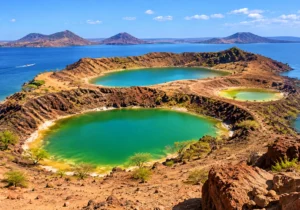
Central Island National Park is one of Kenya’s most unique and remote protected areas. Located in the middle of Lake Turkana, the world’s largest permanent desert lake, the park covers a volcanic island characterized by rugged lava formations, crater lakes, and dramatic landscapes. Established as a national park in 1983, Central Island forms part of the Lake Turkana National Parks UNESCO World Heritage Site and protects one of East Africa’s most extraordinary natural environments.
The park is famous for its volcanic scenery, crocodile breeding habitats, and spectacular views across Lake Turkana. Furthermore, the island’s isolation creates a unique ecosystem that supports a variety of wildlife and birdlife. As a result, Central Island attracts adventurers, photographers, researchers, and nature enthusiasts seeking one of Kenya’s most unusual safari destinations.
The volcanic crater lakes are the most famous attraction within Central Island National Park and among the most remarkable geological features in Kenya. The island contains three crater lakes, commonly known as Crocodile Lake, Flamingo Lake, and Tilapia Lake.
These lakes create a dramatic contrast against the island’s rugged volcanic terrain while providing important habitats for wildlife and bird species. Meanwhile, visitors can enjoy breathtaking views from elevated viewpoints overlooking both the crater lakes and the vast waters of Lake Turkana.
Guided excursions around the island allow visitors to explore its volcanic formations while learning about its geological history and ecological significance.
Central Island supports a variety of wildlife species adapted to the harsh conditions of Lake Turkana and its volcanic environment. Furthermore, the island provides important breeding grounds for Nile crocodiles and supports numerous aquatic and terrestrial species.
Central Island offers excellent birdwatching opportunities, particularly around its crater lakes and shoreline habitats. Moreover, the island attracts both resident and migratory bird species year-round.
Visitors can access the island by boat while enjoying spectacular views of Lake Turkana and its surrounding landscapes.
Guided tours allow visitors to explore the island’s volcanic crater lakes and learn about their ecological importance.
The park offers rewarding birdwatching opportunities around the crater lakes and shoreline habitats.
Visitors can observe Nile crocodiles and other wildlife species that inhabit the island and surrounding waters.
The volcanic landscapes, crater lakes, and expansive lake views create exceptional opportunities for photography and exploration.
Visitors can explore volcanic formations and learn about the geological processes that shaped the island.
Central Island National Park forms part of the Lake Turkana National Parks UNESCO World Heritage Site. The park protects unique volcanic landscapes, important crocodile breeding grounds, and diverse aquatic ecosystems that contribute significantly to regional biodiversity.
Furthermore, its ecological importance and geological significance make it an important destination for conservation, research, and eco tourism.
The best time to visit Central Island is during the dry months from June to September and December to March. During these periods, visitors can enjoy favorable conditions for boat excursions, wildlife viewing, and photography.
Meanwhile, warm temperatures persist year-round due to the park’s desert climate. However, travelers should prepare for strong sunshine and arid conditions when exploring the island.
Central Island combines volcanic landscapes, crater lakes, unique wildlife, and remarkable geological features into one extraordinary destination. Whether you enjoy birdwatching, photography, nature exploration, or adventure travel, the park offers one of Kenya’s most distinctive wilderness experiences.