Bwindi Impenetrable National Park is Uganda’s most famous wildlife destination and one of Africa’s premier gorilla trekking locations. Situated in southwestern Uganda along the edge of the Albertine Rift Valley, the park covers approximately 331 square kilometers of ancient rainforest, making it one of the oldest and most biologically diverse forests on the African continent. Established as a national park in 1991 and later designated a UNESCO World Heritage Site, Bwindi attracts thousands of visitors each year seeking unforgettable encounters with endangered mountain gorillas.
The park’s dense rainforest, mist-covered hills, steep valleys, and rich biodiversity create a spectacular wilderness experience. Bwindi Impenetrable National Park is home to nearly half of the world’s remaining mountain gorilla population, making it one of the most important conservation areas for these remarkable primates.
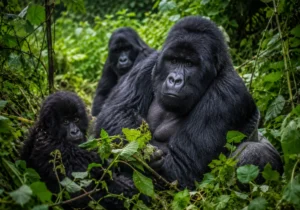
Gorilla trekking is the highlight of every visit to Bwindi. Guided treks lead visitors through dense rainforest in search of habituated gorilla families living within the park.
Once located, visitors spend one unforgettable hour observing these gentle giants in their natural habitat. Watching mountain gorillas feed, play, communicate, and care for their young provides one of the most powerful wildlife experiences anywhere in the world.
Bwindi currently hosts multiple habituated gorilla families across its four trekking sectors of Buhoma, Ruhija, Rushaga, and Nkuringo, offering excellent trekking opportunities throughout the year.
Bwindi Park supports an extraordinary variety of wildlife species within its ancient rainforest ecosystem.
Bwindi Impenetrable National Park is one of Africa’s most important birdwatching destinations, with more than 350 recorded bird species, including numerous Albertine Rift endemics.
A trek through the ancient rainforest provides a rare opportunity to observe habituated mountain gorilla families up close in the wild.
Visitors can spend up to four hours with a semi-habituated gorilla family while accompanying researchers and trackers.
The park offers exceptional birdwatching opportunities within its montane forest ecosystem.
Guided forest walks allow visitors to explore waterfalls, scenic viewpoints, and diverse wildlife habitats.
Visitors can learn about the traditions, history, and forest survival skills of the indigenous Batwa people.
The misty rainforest, dramatic landscapes, and unique wildlife provide outstanding photography opportunities.

Bwindi Impenetrable National Park was designated a UNESCO World Heritage Site because of its exceptional biodiversity and conservation significance. The park protects one of Africa’s oldest rainforests and serves as a critical refuge for endangered mountain gorillas and numerous endemic species.
Its ecological importance makes it one of the continent’s most valuable protected areas and a leading example of successful wildlife conservation.
The best time to visit Bwindi is during the dry seasons from June to August and December to February. During these months, forest trails are generally less slippery, making gorilla trekking and hiking activities more comfortable.
The rainy seasons bring lush vegetation and excellent photography conditions, although trekking trails may become more challenging. Gorilla trekking is possible year-round.
Bwindi combines extraordinary wildlife encounters, ancient rainforest landscapes, and world-renowned gorilla trekking experiences into one unforgettable destination. Whether you are seeking adventure, conservation experiences, birdwatching, or nature photography, Bwindi offers one of Africa’s most remarkable safari experiences.