Ol Donyo Sabuk National Park is one of Kenya’s most accessible and scenic protected areas, offering visitors a unique combination of mountain landscapes, wildlife, birdwatching, hiking, and rich colonial history. Located approximately 85 kilometers northeast of Nairobi in Machakos County, the park is centered around Ol Donyo Sabuk Mountain, a prominent forested peak that rises dramatically from the surrounding plains.
Established as a national park in 1967, Ol Donyo Sabuk National Park covers approximately 20 square kilometers and protects an important montane ecosystem within central Kenya. The mountain’s name comes from the Maasai language and translates to “The Big Mountain”, while local Kikuyu communities refer to it as Kilima Mbogo, meaning “Mountain of the Buffalo.”
With panoramic views, lush forests, waterfalls, and diverse wildlife, Ol Donyo Sabuk National Park is a popular destination for hikers, nature lovers, photographers, and day-trippers seeking an outdoor adventure close to Nairobi.
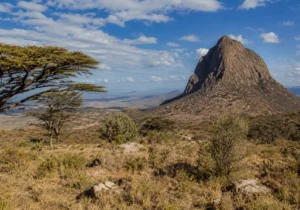
At the heart of the park stands Ol Donyo Sabuk Mountain, rising to approximately 2,145 meters above sea level. The mountain dominates the surrounding Athi Plains and offers breathtaking views across central Kenya.
The mountain’s forested slopes provide a cool and refreshing environment that contrasts sharply with the surrounding lowlands. Visitors can enjoy scenic drives and hiking trails leading to the summit, where panoramic views extend toward Mount Kenya, the Aberdare Range, Nairobi, and the surrounding countryside on clear days.
Its elevated position makes the mountain one of the most rewarding viewpoints in the region.
One of the park’s highlights is reaching the summit of Ol Donyo Sabuk Mountain. Visitors can either drive along the winding road to the top or hike through the forest.
The summit rewards visitors with spectacular views of rolling plains, distant mountain ranges, and lush forests. The cool mountain air and peaceful surroundings make it a perfect location for relaxation and photography.
The summit area is also home to historical landmarks that add cultural and historical significance to the visit.
Among the park’s most unique attractions is the grave of Sir William Northrup McMillan, an American-born adventurer, philanthropist, and colonial settler who played an important role in Kenya’s early history.
McMillan chose Ol Donyo Sabuk as his final resting place, and his grave remains a notable landmark near the mountain summit. Visitors can learn about his life and contributions as they explore the area.
The site provides an interesting historical dimension that complements the park’s natural attractions.
Although relatively small, Ol Donyo Sabuk National Park supports a variety of wildlife species adapted to its forest and grassland habitats.
The park is particularly famous for its buffalo population, which inspired the local name “Mountain of the Buffalo.” Wildlife sightings are common along roads, hiking trails, and forest clearings.
The combination of forest habitats and open areas provides excellent opportunities for wildlife observation.
Ol Donyo Sabuk National Park is a rewarding destination for bird enthusiasts, with more than 150 bird species recorded within its forests, grasslands, and wetlands.
The mountain’s varied habitats support both forest birds and birds of prey, making birdwatching enjoyable year-round.
Early morning and late afternoon are the best times for birdwatching within the park.
Although located just outside the national park boundary, Fourteen Falls is a popular attraction often visited alongside Ol Donyo Sabuk National Park.
The waterfall consists of multiple streams cascading over a rocky cliff into the Athi River below, creating a dramatic and picturesque scene. Visitors can enjoy photography, boat rides, and nature walks in the surrounding area.
Combining a visit to Fourteen Falls with a trip to Ol Donyo Sabuk creates a rewarding full-day adventure.
The park offers challenging hiking trails that lead through forests to the summit of Ol Donyo Sabuk Mountain.
Visitors can observe buffaloes, monkeys, bushbucks, and other wildlife species throughout the park.
The park’s forests and mountain habitats support numerous bird species.
Mountain viewpoints, forests, wildlife, and surrounding landscapes provide exceptional photography opportunities.
Visitors can learn about the life of Sir William Northrup McMillan and explore historical sites near the summit.
Guided and self-guided walks allow visitors to experience the park’s natural beauty up close.
Ol Donyo Sabuk National Park protects an important montane forest ecosystem that provides habitat for wildlife and serves as a valuable water catchment area.
The forest consists of indigenous and planted tree species that support biodiversity while helping regulate local climate and water resources. Conservation efforts focus on habitat protection, reforestation, and environmental education.
This forested mountain acts as a green refuge within an increasingly developed region of central Kenya.
The park plays a crucial role in preserving wildlife habitats and protecting one of the few remaining forested mountains in the area.
Conservation initiatives focus on wildlife protection, habitat restoration, sustainable tourism, and community involvement. These efforts help maintain biodiversity while ensuring that future generations can continue to enjoy the park’s natural beauty.
Its proximity to Nairobi also makes it an important destination for environmental education and recreation.
Visitors to Ol Donyo Sabuk National Park are required to pay entry fees administered by the Kenya Wildlife Service (KWS).
| Visitor Category | Adult | Child/Student |
|---|---|---|
| East African Citizen | KES 500 | KES 250 |
| Kenya Resident | KES 675 | KES 350 |
| Other African Citizen | USD 20 | USD 10 |
| Non-Resident | USD 50 | USD 25 |
| Service | Details |
|---|---|
| Park Management | Kenya Wildlife Service (KWS) |
| Location | Machakos County, approximately 85 km from Nairobi |
| Best Time to Visit | June–October and January–March |
| Main Attractions | Ol Donyo Sabuk Mountain, summit views, wildlife, McMillan’s grave |
| Activities | Hiking, birdwatching, wildlife viewing, photography |
| Recommended Stay | Half-day to full-day visit |
| Accessibility | Accessible by road from Nairobi and Thika |
| Payment Method | eCitizen and approved KWS cashless payment platforms |
Entry fees are subject to change by the Kenya Wildlife Service (KWS). Visitors should verify current rates before travel.
The best time to visit Ol Donyo Sabuk is during the dry seasons from June to October and January to March.
These months provide ideal conditions for hiking, wildlife viewing, photography, and enjoying panoramic views from the summit. Trails are generally easier to navigate, and clear skies offer excellent visibility.
The rainy seasons bring lush vegetation and vibrant scenery, making the mountain particularly attractive for nature lovers.
Ol Donyo Sabuk National Park offers a unique blend of mountain adventure, wildlife, history, and natural beauty within easy reach of Nairobi. From the scenic summit views and forest trails to the park’s rich biodiversity and historical landmarks, visitors can enjoy a rewarding outdoor experience in one of Kenya’s most accessible national parks.
Whether you are interested in hiking, birdwatching, photography, or simply escaping the city for a day, Ol Donyo Sabuk offers a memorable journey into a beautiful, peaceful mountain wilderness.